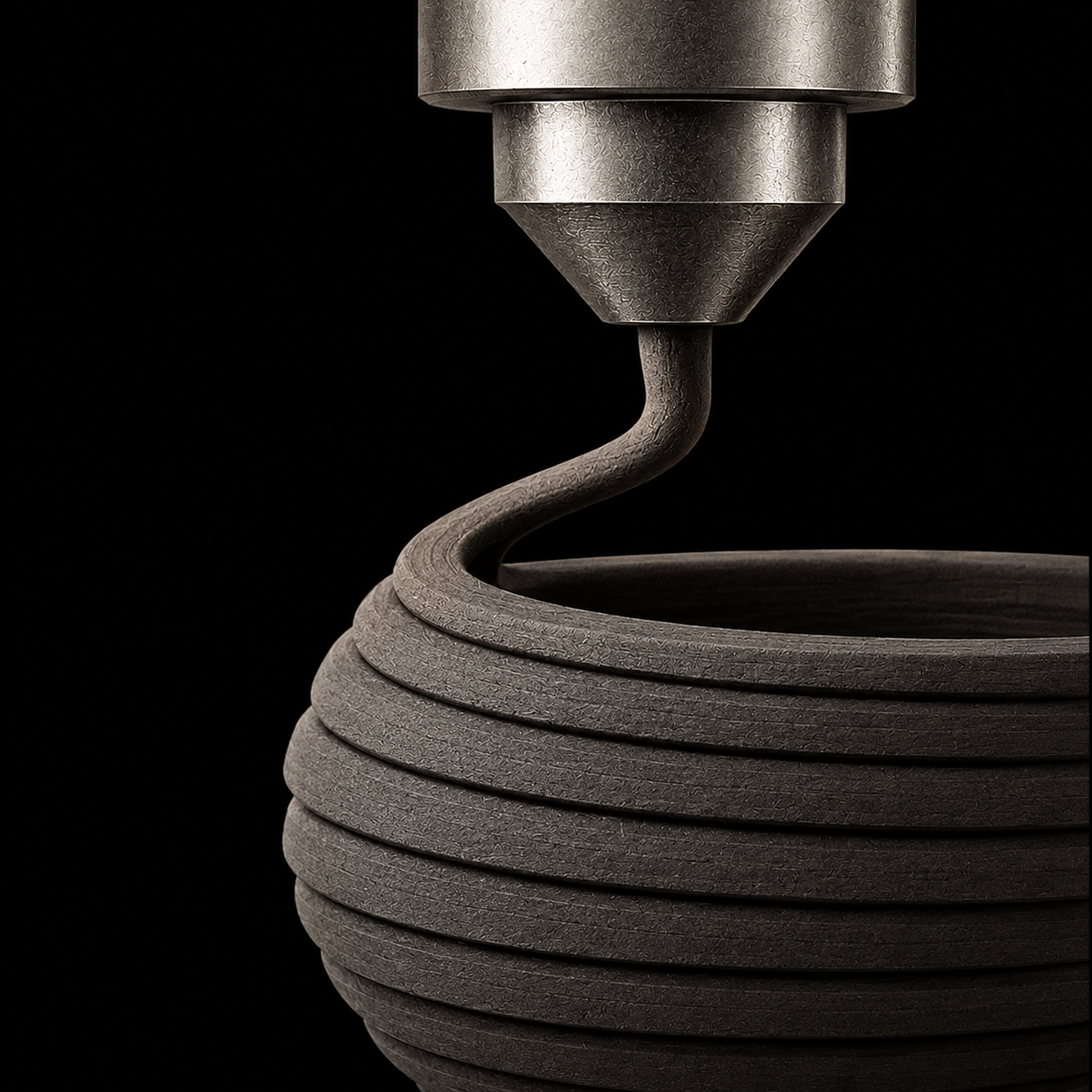
AdventureTech Launches ADT Ceram-DD50 Desktop Ceramic Printer
AdventureTech has introduced the ADT Ceram-DD50 desktop ceramic 3D printer, featuring a 20 µm optical resolution and a 10 mL minimum material load for slurry research.
Published: November 26, 2026 • Original report: 2026-11-23
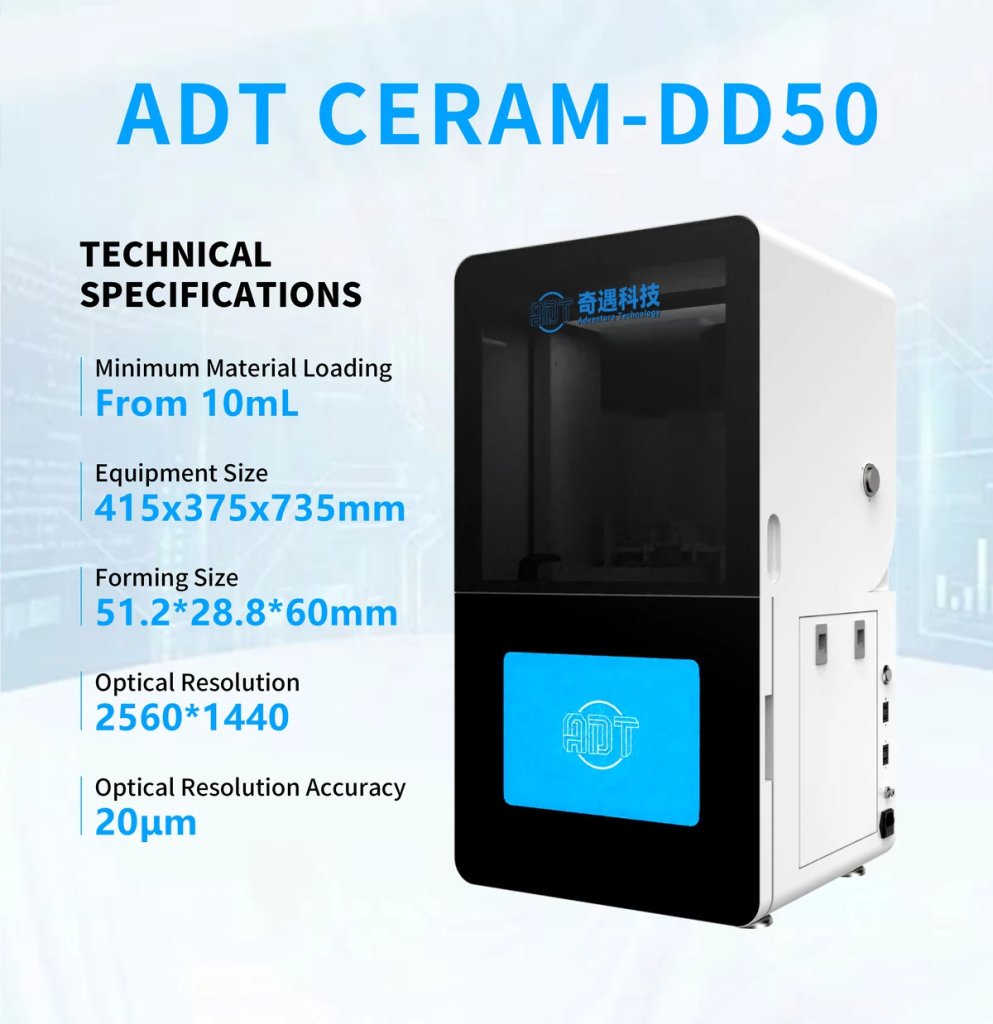
AdventureTech has announced the commercial launch of the ADT Ceram-DD50, a compact desktop ceramic 3D printer designed specifically for material research and small-scale structural fabrication. Headquartered in Foshan, China, AdventureTech developed the machine to lower the material barrier for laboratories testing new ceramic slurry formulations. The system is showcased at the Formnext 2026 trade fair, held from November 17 to 20 in Frankfurt, Germany.
The DD50 serves as the lead model in the manufacturer’s new Mini series. By utilizing a dual-cylinder feeding architecture combined with top-down digital light processing (DLP), the hardware accommodates high-viscosity ceramic suspensions while keeping material consumption minimal during early-stage trials.
Key Facts & Specifications
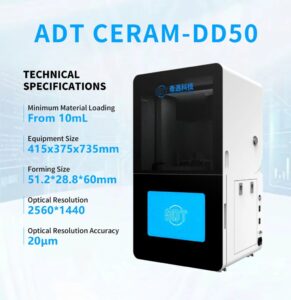
- Build Area: 51.2 × 28.8 × 60 mm
- Minimum Material Load: 10 mL of ceramic slurry
- Optical Resolution Accuracy: 20 µm
- Optical Engine: Custom 2560 × 1440 resolution
- Physical Dimensions: 415 × 375 × 735 mm
- Feed Mechanism: Dual-cylinder feed structure with blade spreading
- Exhibition Debut: Formnext 2026, Hall 11, Booth D71
Process, Materials, and Research Relevance
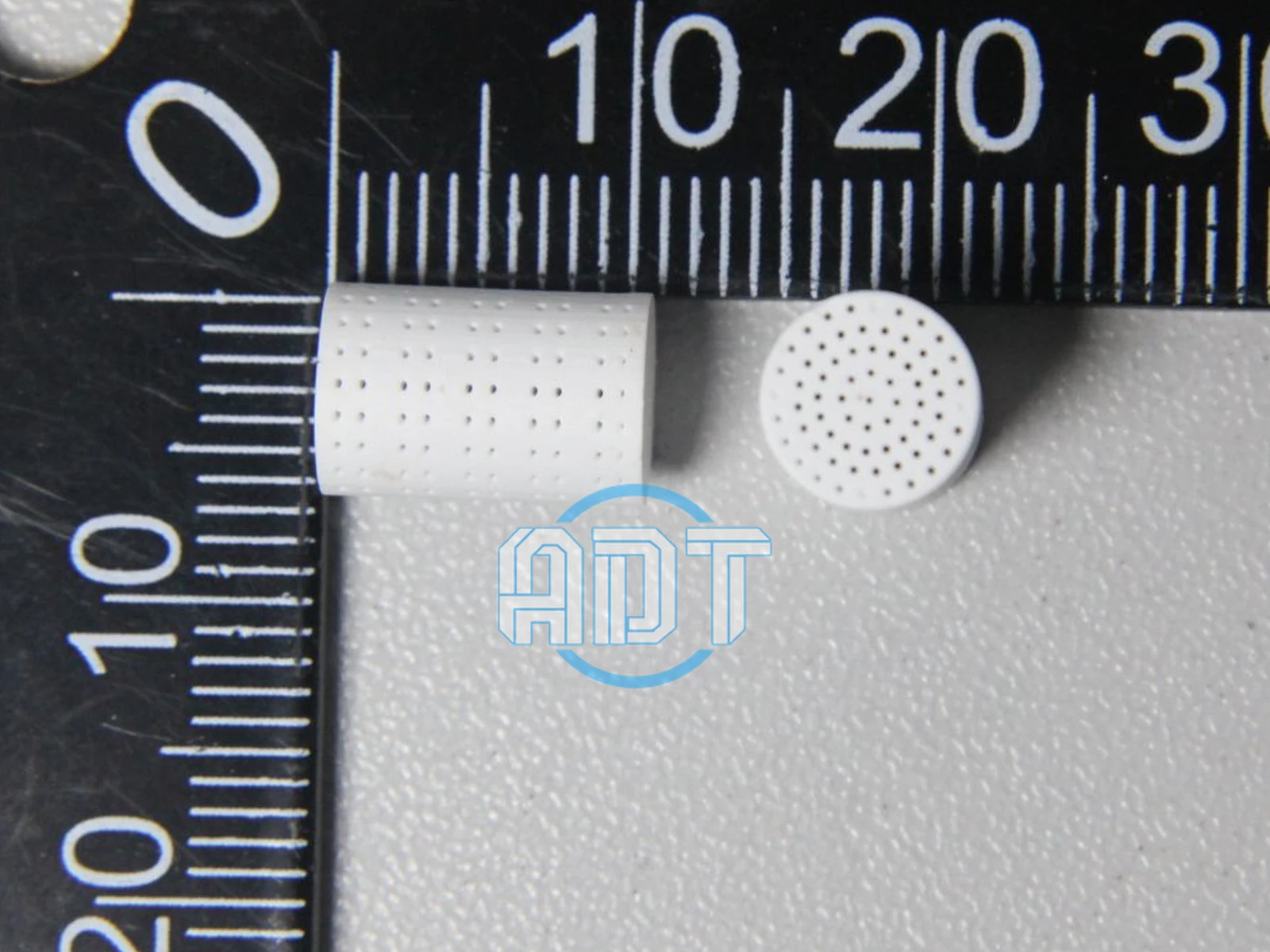
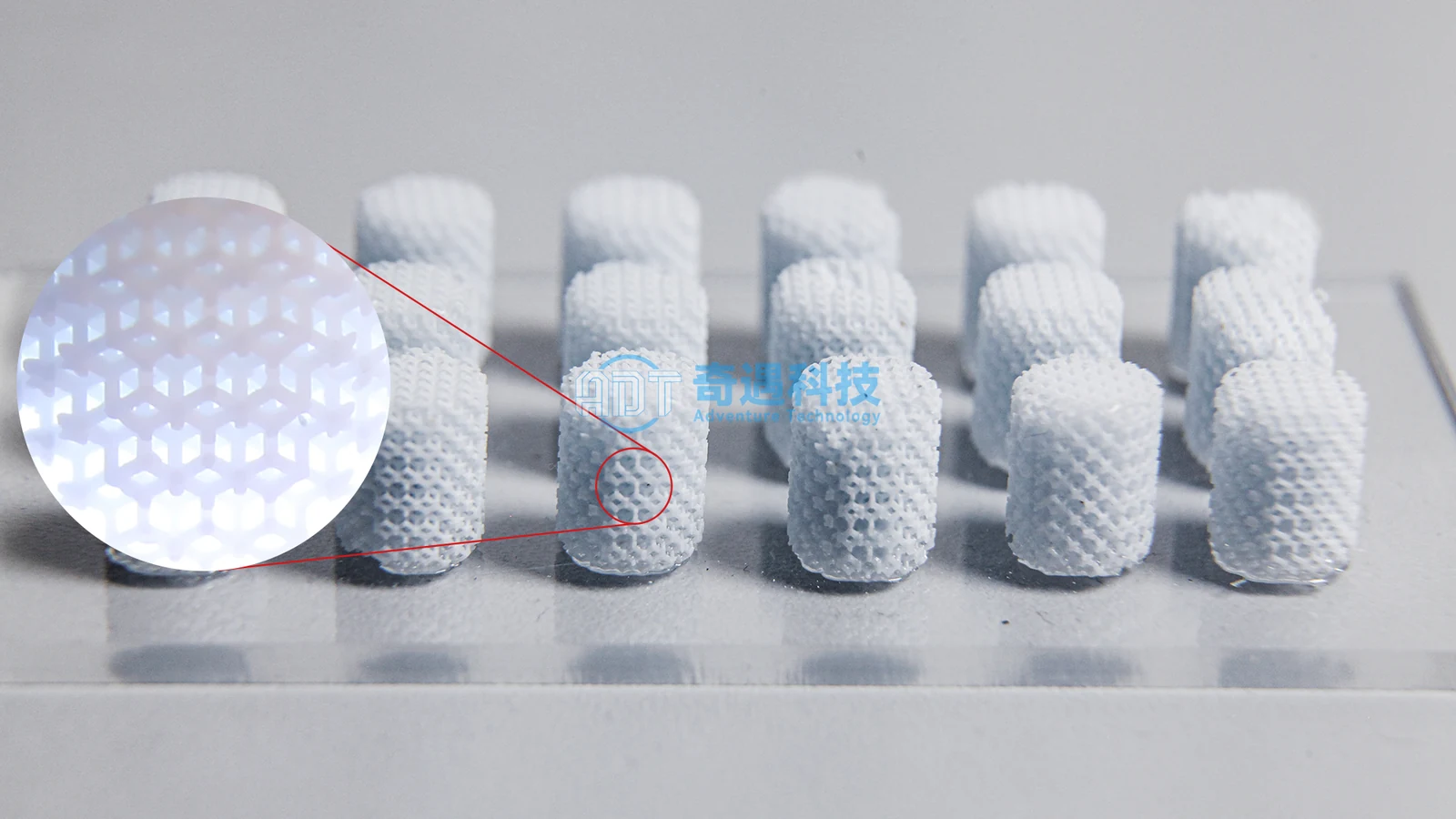
Ceramic additive manufacturing often requires large volumes of costly slurry just to calibrate exposure and viscosity parameters. The ADT Ceram-DD50 addresses this constraint by allowing researchers to conduct valid test prints using only 10 mL of material. This low threshold enables laboratories to evaluate experimental batches of alumina, zirconia, and other functional ceramic formulations without committing to full vats of slurry. The printer utilizes a top-down DLP method paired with an integrated heating system to maintain stable printing conditions across varying viscosities, facilitating the production of complex geometries such as triply periodic minimal surface (TPMS) lattices and fine-curved architectural structures for subsequent debinding and sintering.
Project Video
Original Source
Sources:
- AdventureTech launches the ADT Ceram-DD50 at Formnext 2026: a 20 µm desktop ceramic 3D printer for material research and complex structures | Adventure Technology
- AdventureTech launches ADT Ceram-DD50 desktop ceramic printer at Formnext 2026 – 3D Printing Industry
- Professional Ceramic 3D Printers | Adventure Technology
- Instagram Post #1