Ceramic Additive Manufacturing: Pushing the Boundaries of 3D Printing
A look at the evolving landscape of ceramic 3D printing and its potential as a transformative material frontier in additive manufacturing.
Published: December 9, 2017 • Original report: 2017-12-06
Breaking the Frontier: The Rise of Ceramic 3D Printing
As additive manufacturing continues to evolve, ceramics have emerged as a significant frontier for the industry. While plastics and metals have long dominated the 3D printing landscape, the unique thermal and structural properties of ceramic materials are driving new interest in high-performance applications.
This shift represents a notable evolution in material science, moving beyond traditional hobbyist clay extruders toward sophisticated processes capable of producing industrial-grade components. Understanding the potential of these materials is essential for makers and engineers looking to leverage the precision of additive manufacturing for ceramic production.
Key Insights on Ceramic Additive Manufacturing
- Material Versatility: Ceramics are being explored for their extreme heat resistance, electrical insulation, and chemical stability.
- Technical Challenges: The process often requires managing delicate drying and kiln-firing stages, which remain critical to the structural integrity of the final part.
- Industrial Potential: There is growing demand for ceramic 3D printing in sectors requiring complex geometries that are difficult or impossible to achieve through conventional molding or casting.
How the Technology Evolves
The core challenge in ceramic 3D printing lies in the transition from a printable paste or slurry to a finished, vitrified piece. Unlike thermoplastic printing, where the object is essentially complete once the print cools, ceramic additive manufacturing is a multi-step workflow. This includes the formulation of a printable medium—often a suspension of ceramic powders in a binder—followed by precise extrusion or vat polymerization.
Once the green body is printed, the object must undergo a carefully controlled debinding and sintering process. It is during this high-temperature kiln firing that the material undergoes its final transformation, achieving the hardness and density characteristic of traditional ceramics.
Why It Matters for the Industry
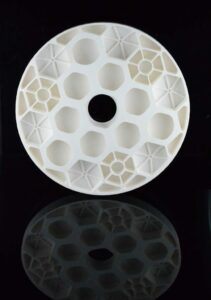
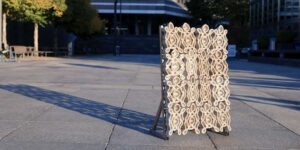
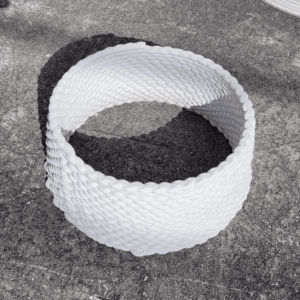
For ceramic artists, architects, and industrial designers, these developments signal a change in how ceramic products are conceptualized. By digitizing the workflow, designers can create intricate lattices, internal cooling channels, and complex artistic forms that push the boundaries of earthen and industrial materials.
As the technology matures, the ability to print ceramics directly allows for greater geometric freedom and faster prototyping. This transition from artisanal techniques to advanced manufacturing processes is positioning ceramics as a vital, high-performance option for the future of 3D printing, enabling the production of parts that can withstand environments where traditional materials would fail.