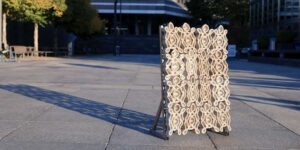
Harvard Ceramics Program Introduces LUTUM v4.6 Printer
Visiting artist Nicolas Touron recently demonstrated the new LUTUM v4.6 3D clay printer in Harvard’s Allston ceramics studio. The equipment will support upcoming courses for art, design, and engineering students.
Published: April 28, 2023 • Original report: 2023-04-25
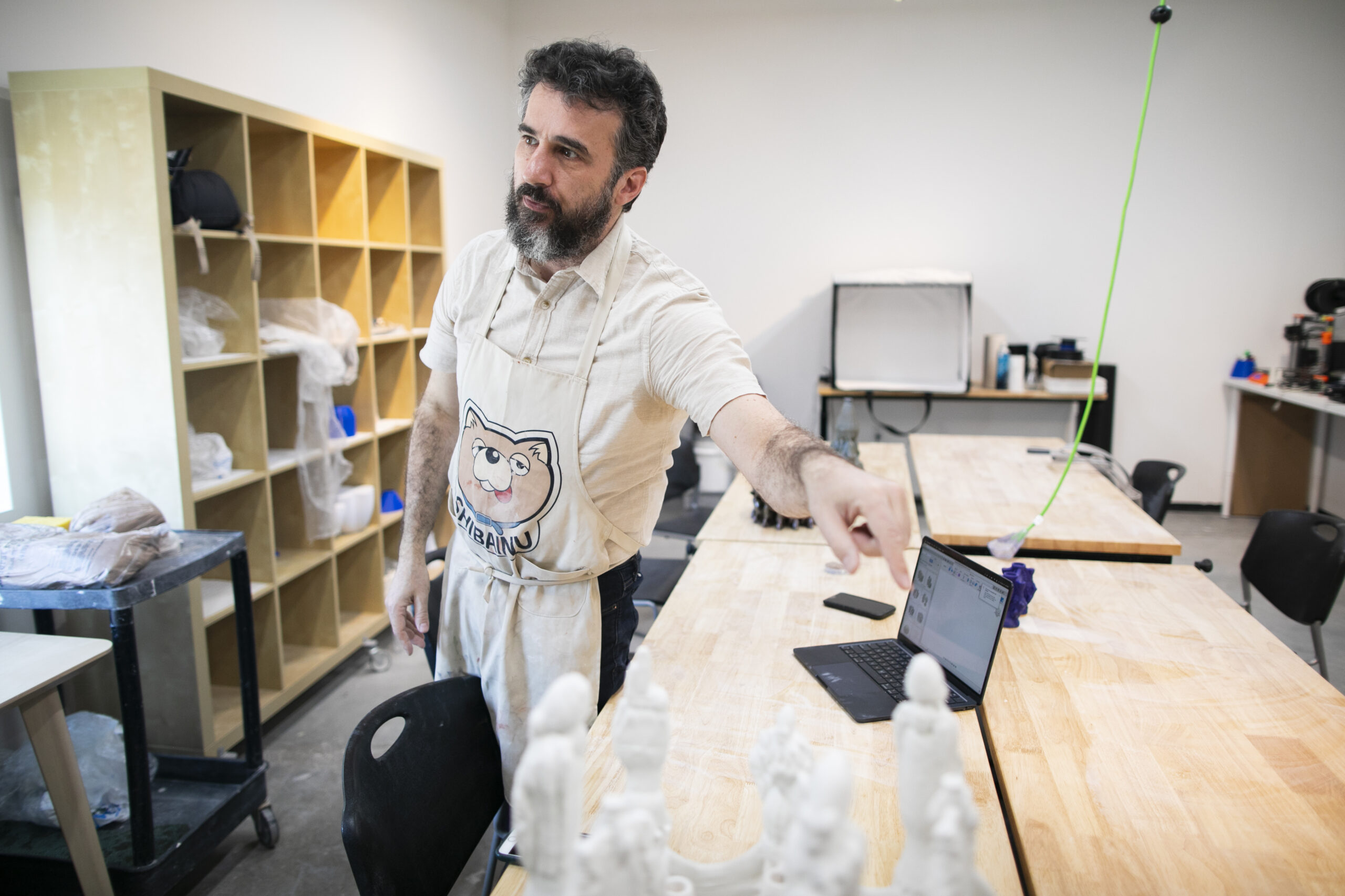
Visiting artist Nicolas Touron recently demonstrated the capabilities of a new additive manufacturing system within Harvard University’s Allston ceramics studio. Operating from morning until afternoon, Touron produced an abstract sculpture by layering continuous coils of material, demonstrating the practical application of the facility’s newly acquired equipment.
The acquisition is part of an initiative by the Ceramics Program, Office for the Arts, to integrate digital fabrication tools into traditional studio environments. Beginning in the upcoming semester, the device will be utilized in academic courses, providing students across art, design, and engineering disciplines with access to ceramic additive manufacturing.
Key Facts & Specifications
- Printer Model: LUTUM v4.6
- Acquisition Date: Fall semester
- Funding Source: Grant from the Boger Family Foundation
- Extrusion System: Air compressor-driven system utilizing cylindrical clay cartridges
- Facility Location: Harvard’s Allston ceramics studio
- Key Personnel: Kathy King (Director of the Ceramics Program); Nicolas Touron (Visiting Artist in Residence)

Integration of Digital Fabrication and Traditional Ceramics
The additive manufacturing process begins digitally, where creators develop computer-aided designs before utilizing a slicer program to generate machine instructions. The hardware employs an air compressor to force clay from a cylindrical cartridge through a nozzle, depositing the material in successive layers. Despite the digital preparation, physical intervention remains necessary throughout the build process. Operators monitor the equipment closely, performing manual stabilization when needed and using wet paintbrushes to maintain the nozzle tip.
While digital clay deposition has seen prior use within Harvard’s Graduate School of Design—notably through robotic arm setups—its deployment in the ceramics studio offers studio artists a direct method for prototyping and small-scale fabrication. Program leadership notes that the technology functions as an auxiliary tool rather than a replacement for traditional methods, requiring a thorough understanding of physical material behavior, moisture levels, and structural stability. Because ceramic materials involve organic variables, machine operators must remain present to address potential printing errors or material depletion.
In March, Touron led an introductory workshop for students from the Graduate School of Design, staff from the School of Engineering and Applied Sciences, and local community members. Future plans involve granting trained students and staff scheduled access to the machine following completion of specialized training sessions.

Original Source
Source Page: Artist demonstrates Harvard's new 3D clay printer