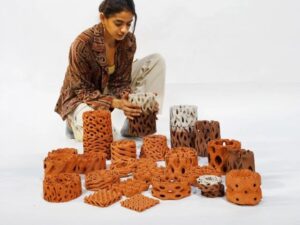
Bridging Code and Clay: Inside Valde’s Custom Ceramic Robotics
Based in Buenos Aires, industrial design studio Valde engineers its own custom delta, polar, and Cartesian 3D printers to explore digital ceramic fabrication and material research.
Published: November 23, 2026 • Original report: 2026-11-20
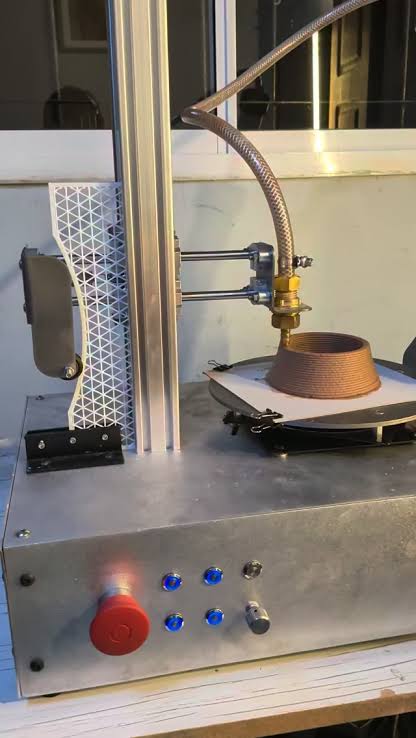
In contemporary manufacturing, automated production and traditional craftsmanship are frequently treated as opposing forces. Valde – fabricación digital artesanal, an industrial design studio and workshop located in Buenos Aires, Argentina, operates directly in the intersection between these two domains. Rather than depending on mass-produced commercial hardware to generate standardized goods, the workshop treats both digital tools and raw earthen materials as interconnected mediums for technical and artistic exploration.
Led by a mechanical technician and industrial designer trained at the Faculty of Architecture, Design and Urbanism at the University of Buenos Aires (FADU-UBA), the studio brings a dual perspective to additive manufacturing. This background merges formal industrial design principles with practical mechanical engineering, shaping a methodology where creation extends far beyond the computer screen. By taking full ownership of the production pipeline, the team writes custom code and builds the physical hardware required to execute complex spatial geometries.
It bears a distant resemblance to a machine built by Daniel de Bruin that we featured back in 2014. This current iteration, however, feels much more modern, offering a seamless fusion of digital and analog craftsmanship.
Key Hardware, Material Science, and Workshop Parameters
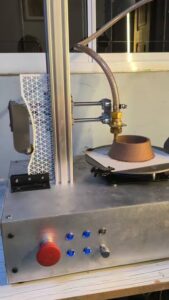
- Machine : Custom-engineered turntable.
- Motion Control: Tailored kinematics and custom-programmed G-code and hardware toolpaths.
- Material Formulation: Proprietary ceramic paste and clay recipes calibrated specifically for the fluid dynamics, viscosity, and shrinkage rates of the workshop’s extrusion systems.
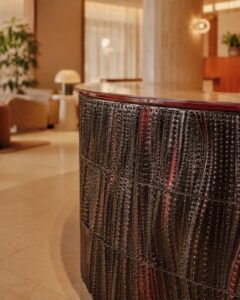
- Production Scope: Small-batch functional ceramics, decorative vessels, architectural components, custom tooling, and collaborative product development.
The Maker-Engineer Approach and Custom Robotic Workflow
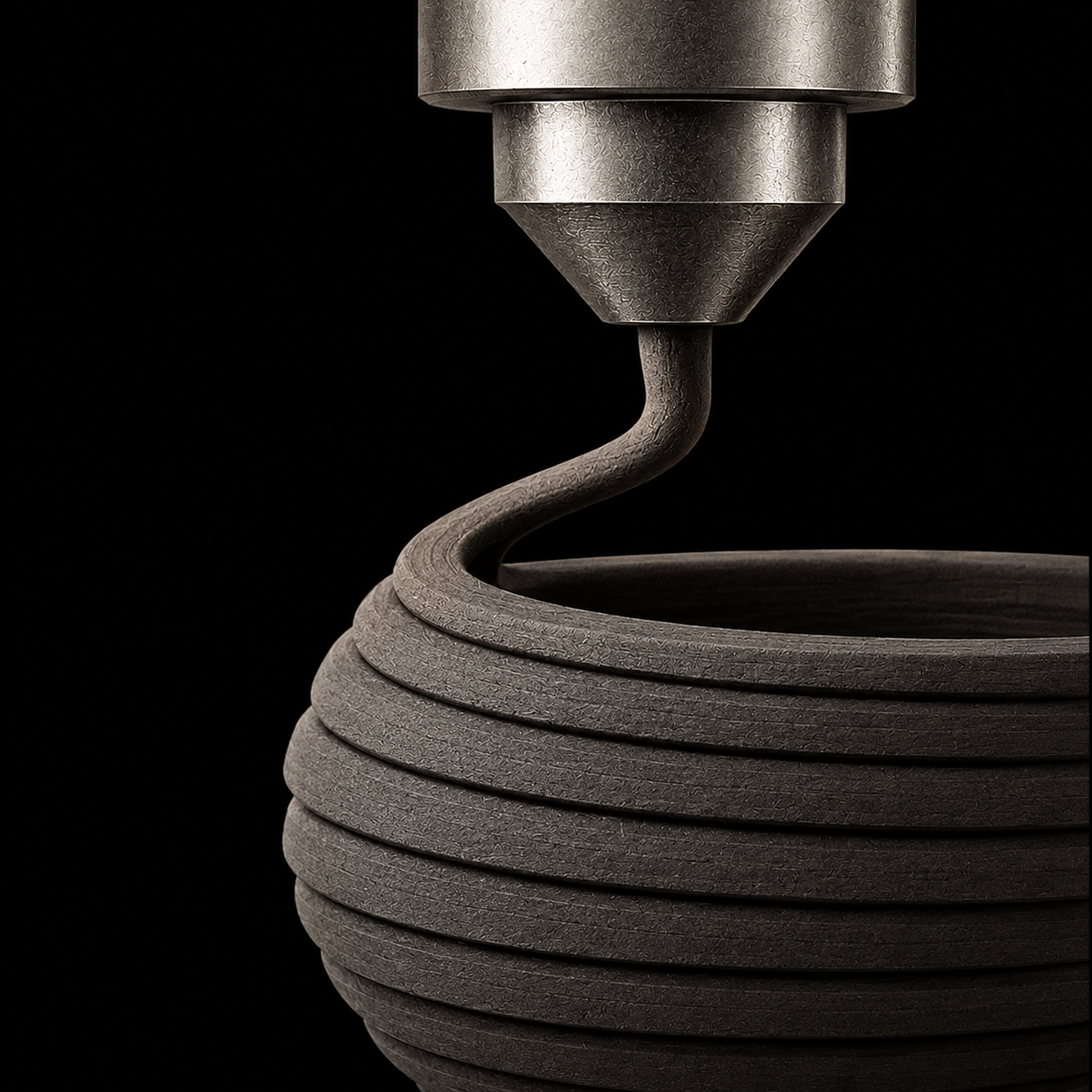
At the center of Valde’s practice is hardware development driven by necessity. Instead of constraining their design ideas to fit the limitations of off-the-shelf commercial 3D printers, the studio designs and constructs its equipment from scratch. Building their own machinery grants the team absolute control over kinematics, scale, and operational precision. Printing with clay presents distinct physical challenges, requiring careful management of moisture content, drying rates, and structural load distribution.
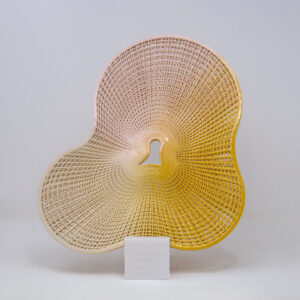
To address these variables, the workshop formulates its own ceramic pastes and couples this material science with customized toolpaths. These spatial coordinates allow the printer nozzle to weave textures, structural ribs, and organic forms that would be difficult or impossible to produce via traditional wheel-throwing or slip-casting. Slight variations in paste consistency and extrusion pressure interact with the digital precision, introducing controlled organic characteristics to the finished output.
Local Context and the Buenos Aires Design Ecosystem
The studio’s approach reflects a broader tradition of resourcefulness found within the Argentine design community. High costs and import barriers for specialized North American or European additive manufacturing equipment often encourage local designers to engineer alternative solutions from the ground up. By building their own machines, the studio avoids the constraints of imported hardware while fostering local technological capability.
This hands-on ethos extends to education and community engagement. The workshop frequently collaborates with fellow artisans, mold-makers, and design students from FADU, helping bridge academic prototypes with practical fabrication techniques. This collaborative environment turns the workshop into a testing ground for new ideas in ceramic manufacturing.
Context for Ceramic Artists, Architects, and Additive Manufacturers
For ceramic artists, architects, and practitioners of additive manufacturing, Valde offers a clear example of how hardware customization can expand the scope of clay 3D printing. By integrating machine design, software programming, and material formulation into a single workflow, the studio demonstrates the value of understanding every link in the digital fabrication chain.
As the architecture and design sectors continue to adopt earthen 3D printing for sustainable construction and bespoke interior elements, studios that master both the machine and the material will lead the field. Valde’s work illustrates that the future of ceramic additive manufacturing relies not just on consuming technology, but on deeply understanding and building the tools themselves.