Structural Logic: Exploring Iterative Geometry in Studio G01 Ceramics
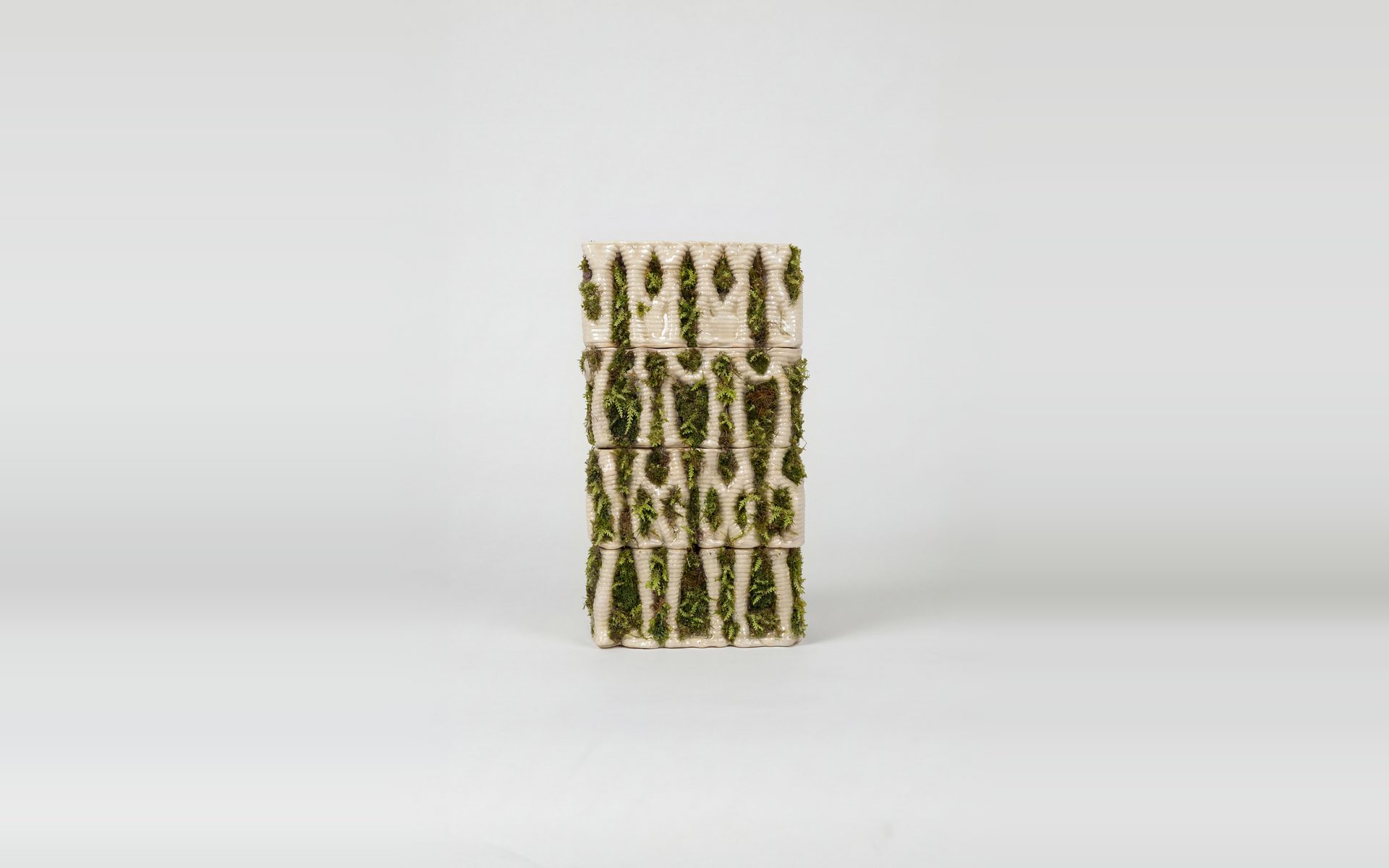
Studio G01 utilizes code-generated loops and interlocking geometries to refine the production of 3D printed ceramic planters.
Published: November 23, 2026 • Original report: 2026-11-20
Merging Computational Design with Ceramic Form
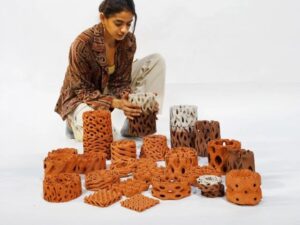
Studio G01, a practice focused on custom-manufactured ceramic objects, has recently presented a design study that highlights the application of iterative mathematical loops in functional pottery. By moving away from traditional vessel silhouettes, the studio focuses on the integration of external structural ribbing to support complex, interlocking forms. This approach treats the exterior geometry of the planter not merely as a decorative element, but as an engineered component necessary for structural stability during the drying and firing process.
The project represents a shift in how additive manufacturing is applied to small-scale ceramic production. Instead of relying on standard cylindrical forms, the studio employs algorithmic generation to define how a pattern might propagate across multiple, distinct objects. This methodology allows for a continuous aesthetic narrative that links individual units within a collection, providing a visual consistency that is difficult to achieve through manual throwing or mold-making alone.
Technical Specifications and Material Considerations
The realization of these pieces requires a precise calibration between software instructions and hardware execution. The studio utilizes proprietary advanced slicing parameters to manage the viscosity and extrusion rate of the clay body, ensuring that the structural ribs retain their intended form without collapsing under their own weight during deposition.
- Design Methodology: Parametric, code-generated loop patterns for external surface geometry.
- Structural Logic: Integrated vertical ribbing designed to reinforce the vessel wall.
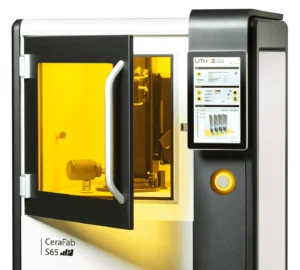
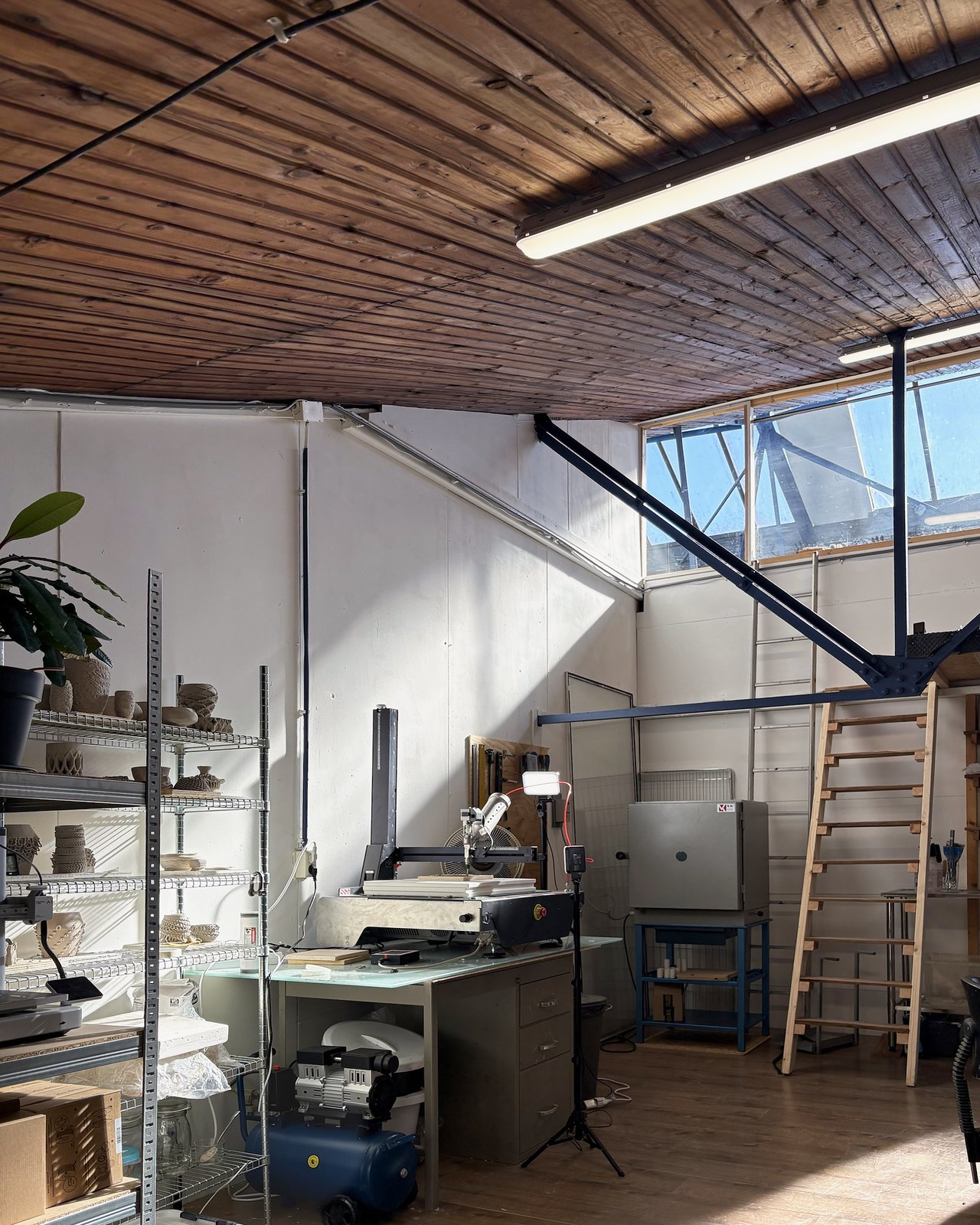
- Manufacturing Process: Ceramic additive manufacturing with a LUTUM clay printer.
- Surface Finish: Consistent geometric interlocking patterns designed to bridge individual vessels.
- Primary Material: Standard industrial clay bodies optimized for mid-range firing temperatures.
Engineering the Fabrication Workflow
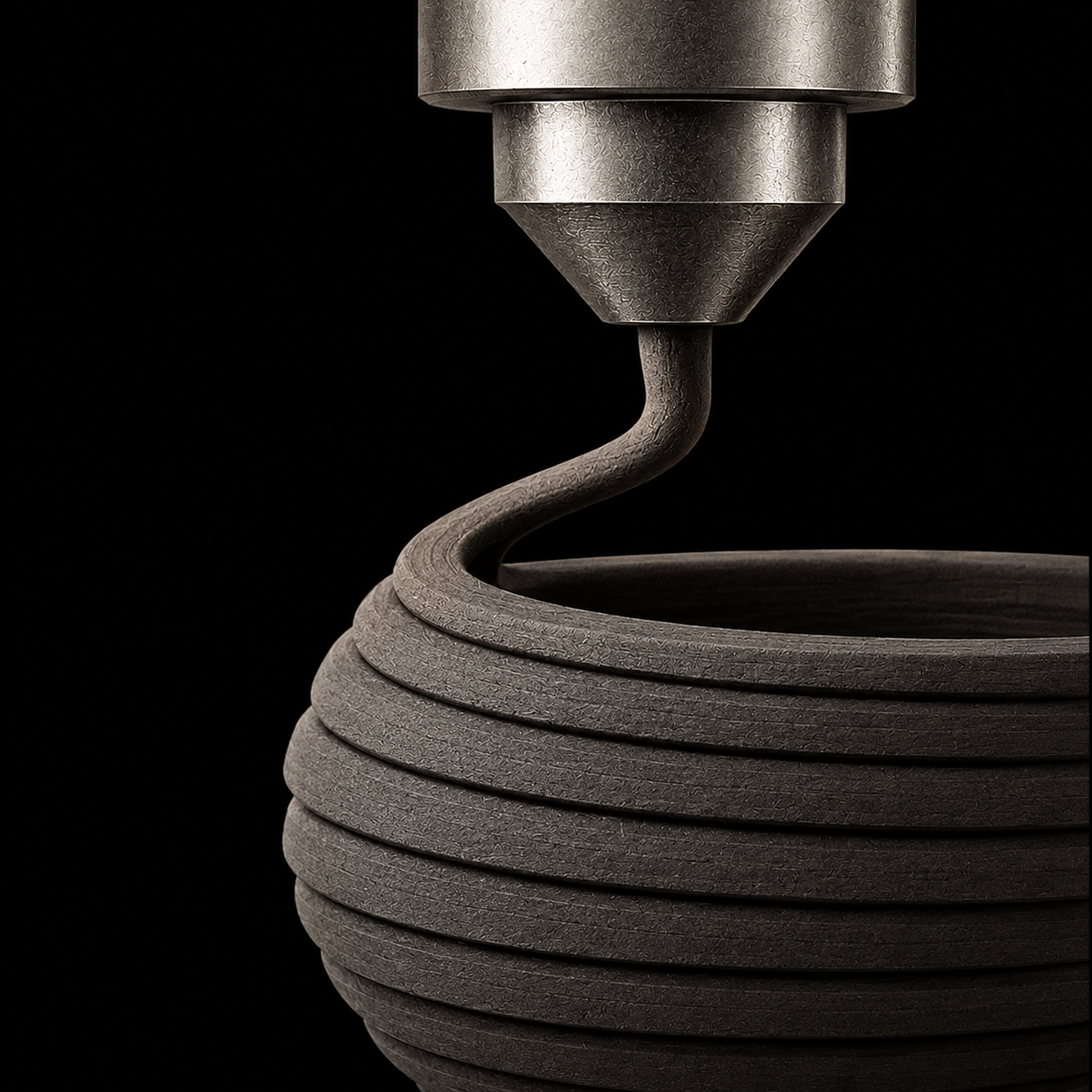
The workflow at Studio G01 begins with the development of custom code that defines the toolpath for the printer. Unlike standard slicers that primarily focus on layer height and infill density, the studio’s process prioritizes the alignment of the clay beads with the structural ribs. This requires a deep understanding of clay rheology—specifically how the material behaves as it is deposited on a curved, vertical plane.
To create the interlocking silhouettes observed in their recent work, the design software must calculate the intersection points of the rib patterns across multiple objects. This ensures that when the final pieces are arranged, the geometric rhythm remains unbroken. The precision of the auger extruder is vital here; any inconsistency in the flow of the clay would result in deviations that prevent the patterns from aligning effectively. By controlling the extrusion rate in tandem with the nozzle speed, the studio maintains a uniform bead diameter, which is essential for the aesthetic cohesion of the final product.
The Role of Digital Tools in Modern Ceramics
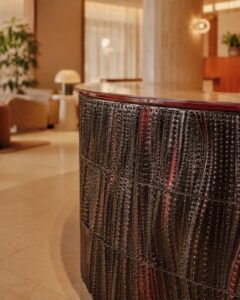
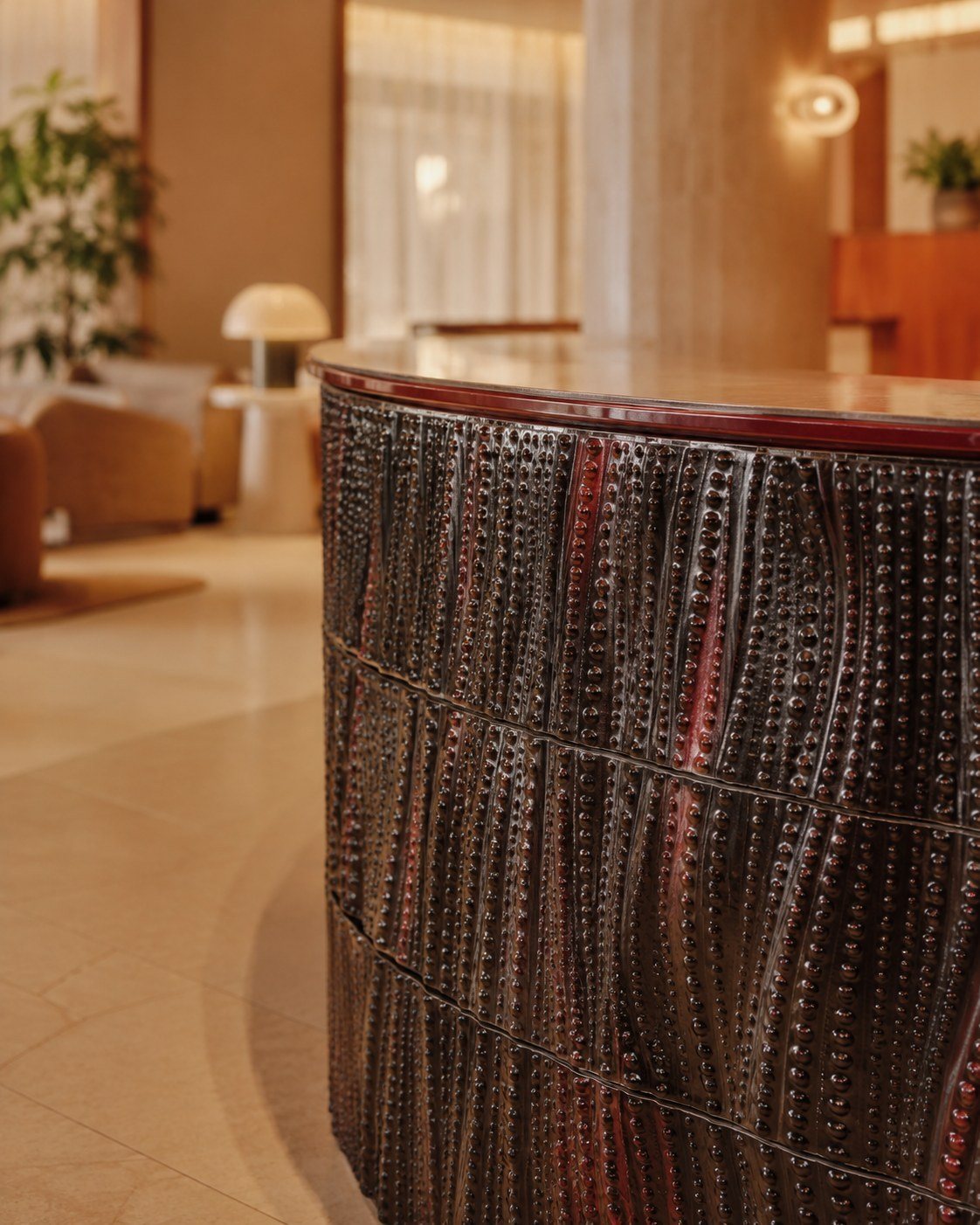
The work produced by Studio G01 serves as a practical demonstration of how independent practitioners are utilizing additive manufacturing to move past the limitations of traditional ceramic production. By moving from one-off artisanal pieces to a system based on parametric control, the studio can offer custom-designed objects that retain a high degree of technical precision. This methodology is particularly relevant for interior environments where specific architectural motifs need to be reflected in the accessories and hardware of the space.
Practical Context for Additive Manufacturing
For artists and architects, the primary lesson of this project is the utility of algorithmic design in maintaining structural integrity. As 3D clay printing continues to mature, the focus is shifting from simply proving the technology works to refining the language of the printed object. The use of ribs as both a structural necessity and an aesthetic choice offers a blueprint for others working in the field.
By choosing to iterate on existing forms through code rather than manual variation, Studio G01 is providing a scalable approach to custom production. As the industry moves toward more complex geometries, the integration of structural logic within the print path will become an increasingly standard requirement for high-quality, professional ceramic manufacturing.