VormVrij Releases LUTUM Dual Extrusion Clay 3D Printer
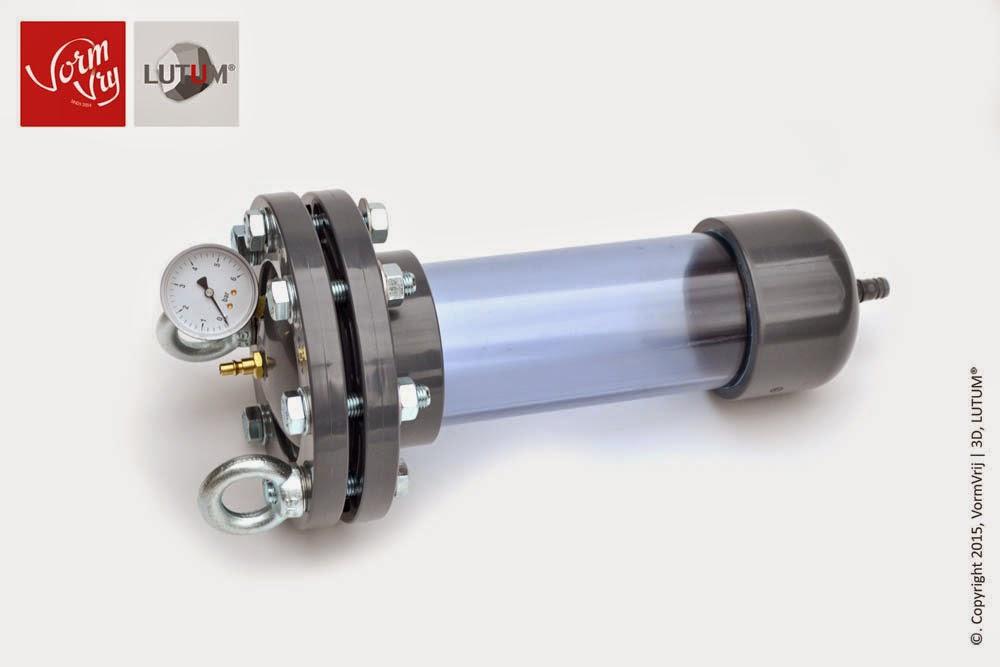
Dutch manufacturer VormVrij expands its ceramic additive manufacturing lineup with the introduction of the dual extrusion LUTUM clay 3D printer.
Published: March 28, 2014 • Original report: 2014-03-25
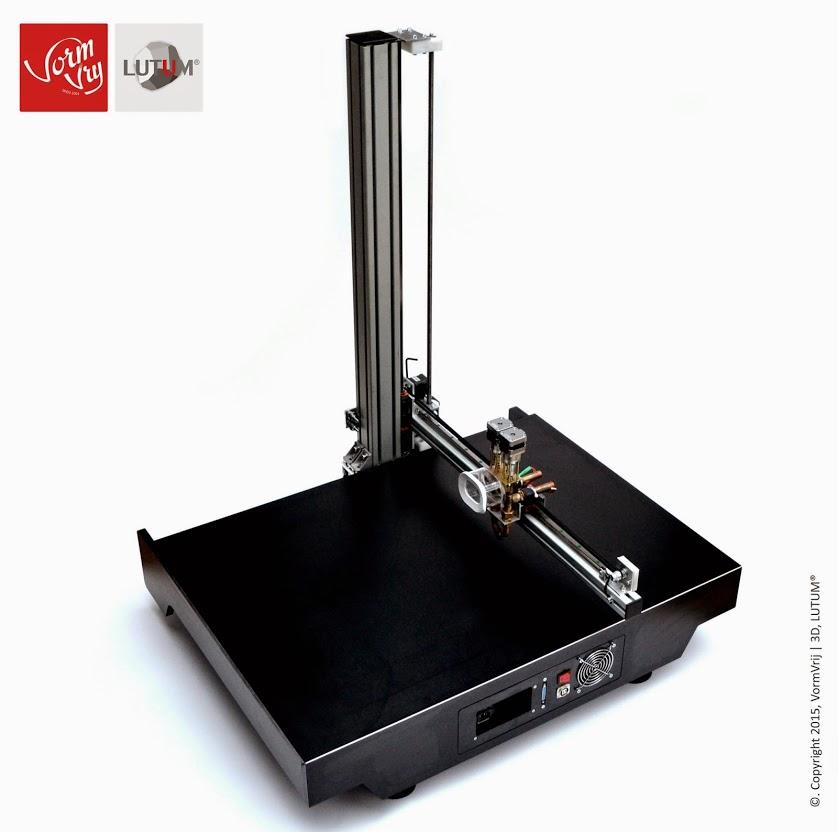
Additive manufacturing in ceramics continues to evolve beyond single-material fabrication limits. Dutch manufacturer VormVrij has formally released the LUTUM Dual Extrusion Clay 3D printer, expanding its established portfolio of paste-based deposition hardware. This development addresses a recurring requirement in ceramic studios and technical facilities: the ability to deposit two distinct clay bodies or colors within a single print job.
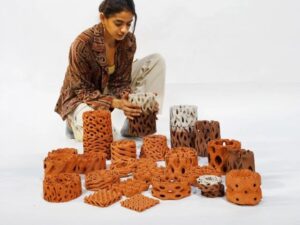
The introduction of dual material capability allows makers to incorporate contrasting textures or compositional variations into functional vessels and artistic sculptures. By integrating dual print heads into a robust chassis, VormVrij maintains the mechanical stability necessary for viscous material deposition while offering extended design freedom for ceramic artists and technical researchers.
Key Facts & Technical Specifications
- Manufacturer: VormVrij (Netherlands)
- Machine Type: Dual Extrusion Clay 3D Printer
- Extrusion System: Dual auger-screw extruders designed for viscous ceramic pastes
- Material Compatibility: Earthenware, stoneware, porcelain bodies, and industrial ceramic slips
- Build Volume: Configured for medium to large-scale studio production
- Motion Control: High-precision stepper motors tailored for heavy paste deposition
- Release Timeline: Announced March 2015
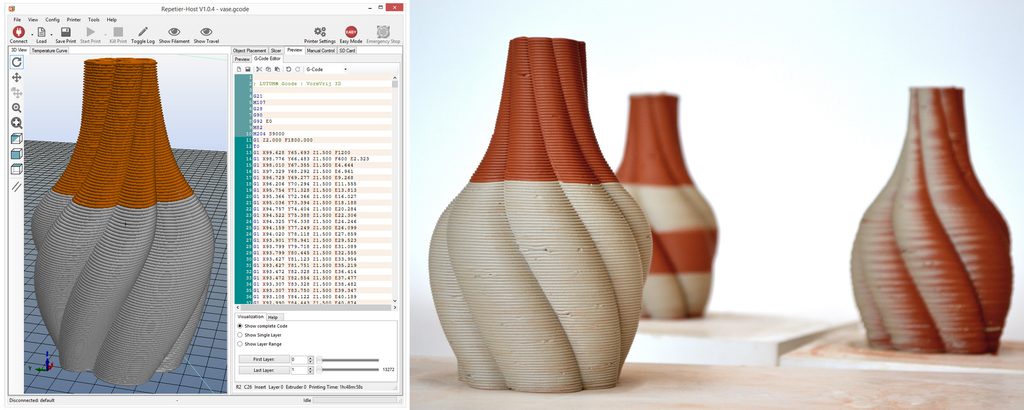
Dual Extrusion Workflow and Material Rheology
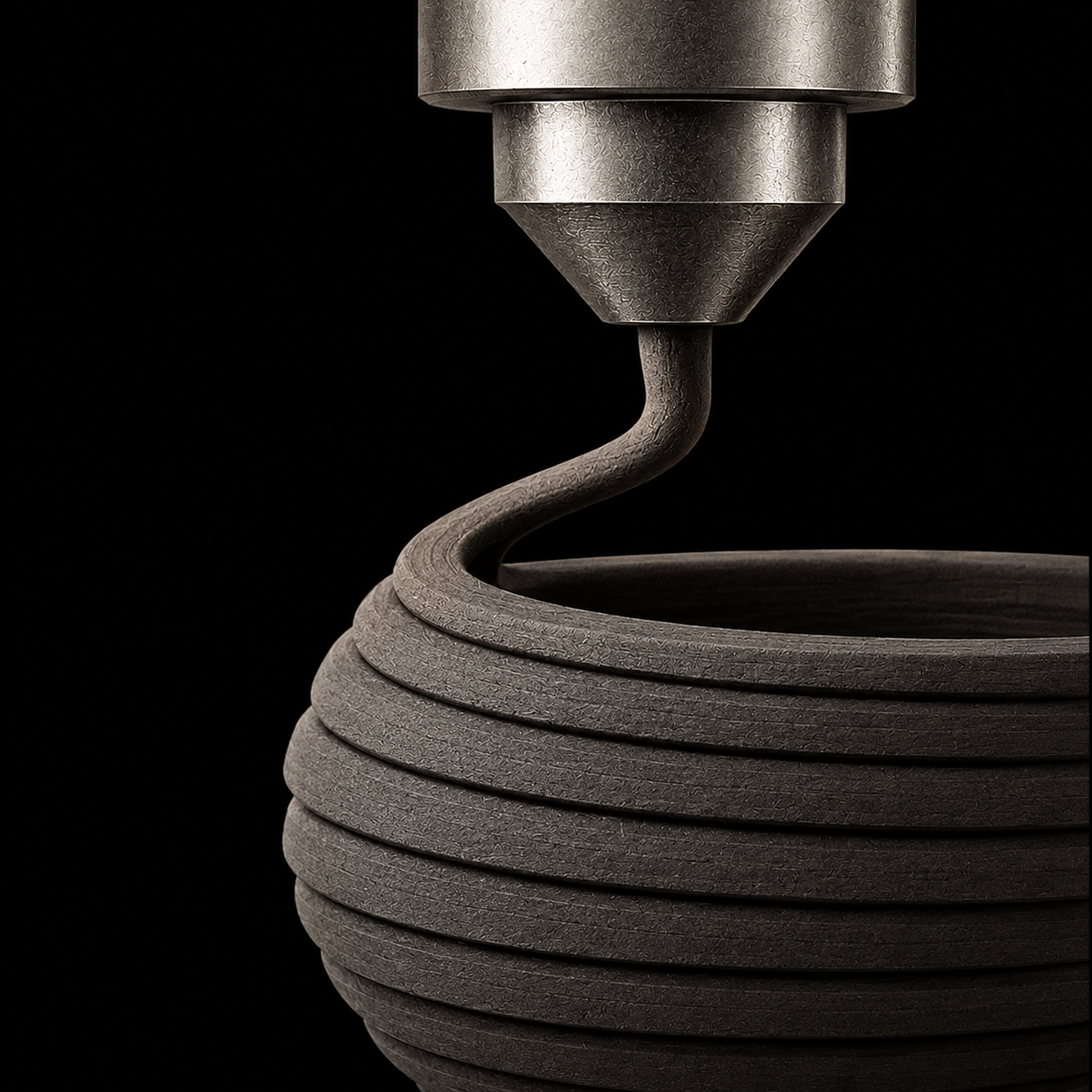
Working with ceramic paste presents distinct challenges compared to thermoplastic filament printing. Clay requires continuous pressure regulation and proper moisture retention to prevent cracking during drying and firing. The dual extrusion setup on the LUTUM machine relies on synchronized auger screws that feed material reliably to individual nozzles. This mechanical configuration minimizes pressure drops and ensures consistent bead geometry.
Operators can program alternating tool paths to layer different clay bodies within the same coordinate system. Managing shrinkage rates between two distinct ceramic pastes requires careful testing, as varying grog content or mineral compositions can react differently during the kiln firing phase. The hardware provides the volumetric precision needed to manage these material transitions cleanly, supporting complex geometric integration without compromising structural integrity.
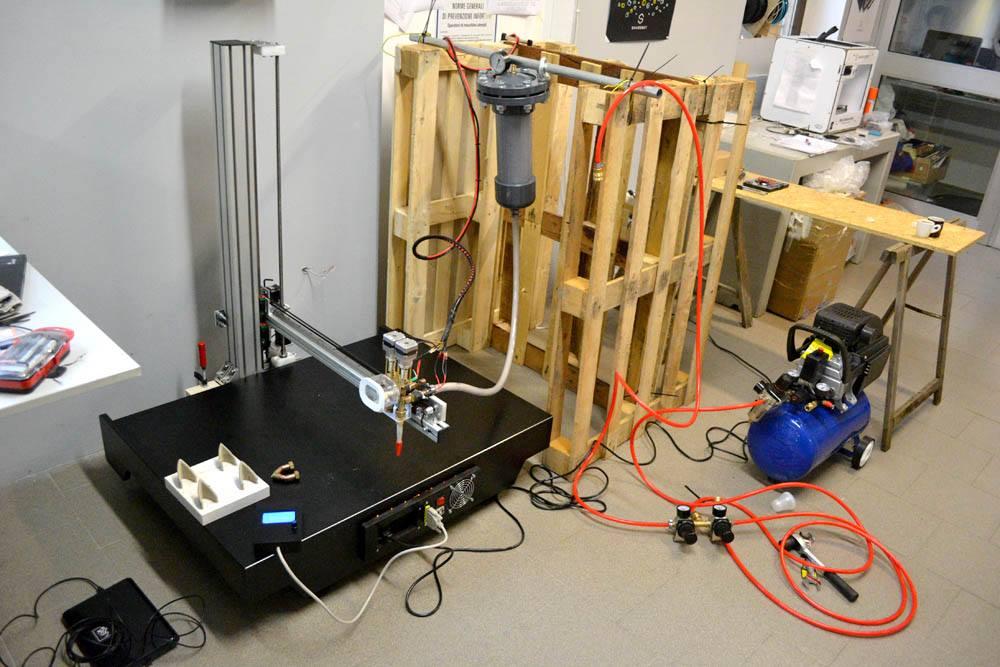
Engineering Heritage and VormVrij’s Development Approach
VormVrij has built a steady reputation within the ceramic 3D printing sector by focusing on robust, accessible machine design. Rather than relying on delicate mechanisms, the company’s LUTUM series utilizes heavy-duty aluminum framing and accessible pneumatic or mechanical drive systems. This design philosophy stems from a practical understanding of studio environments, where equipment must withstand dust, moisture, and continuous daily operation.
The company’s development cycle involves close collaboration with studio potters and ceramicists. Feedback from early single-extruding models directly informed the engineering of the dual-head system. By prioritizing cleanability, easy material loading, and serviceable components, VormVrij ensures that users can maintain their equipment without specialized industrial technicians.
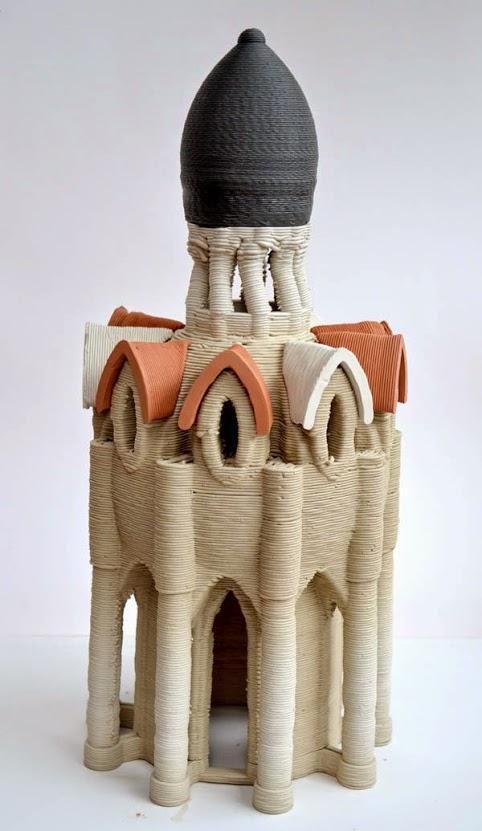
Implications for Ceramic Artists and Technical Studios
The availability of dual-material clay printers opens practical pathways for both artistic exploration and technical prototyping. Ceramic artists can utilize color variations to map data or create gradient aesthetic effects directly on the printer bed. Meanwhile, technical facilities can investigate functionally graded materials, combining high-porosity clays with denser structural slips in a single component.
As ceramic additive manufacturing matures, hardware platforms like the LUTUM dual extrusion system provide the reliability required for production workflows. By lowering the barrier to multi-material deposition, VormVrij supports the broader integration of digital fabrication techniques within traditional ceramic arts and specialized architectural applications.