Minimal Matter: 3D Printed Terracotta and Biomimetic Architecture
Designer Rameshwari Jonnalagedda employs clay additive manufacturing to build modular terracotta systems based on minimal surface mathematics and biological ventilation.
Published: November 24, 2026 • Original report: 2026-11-21
Exploring Minimal Surfaces Through Additive Manufacturing
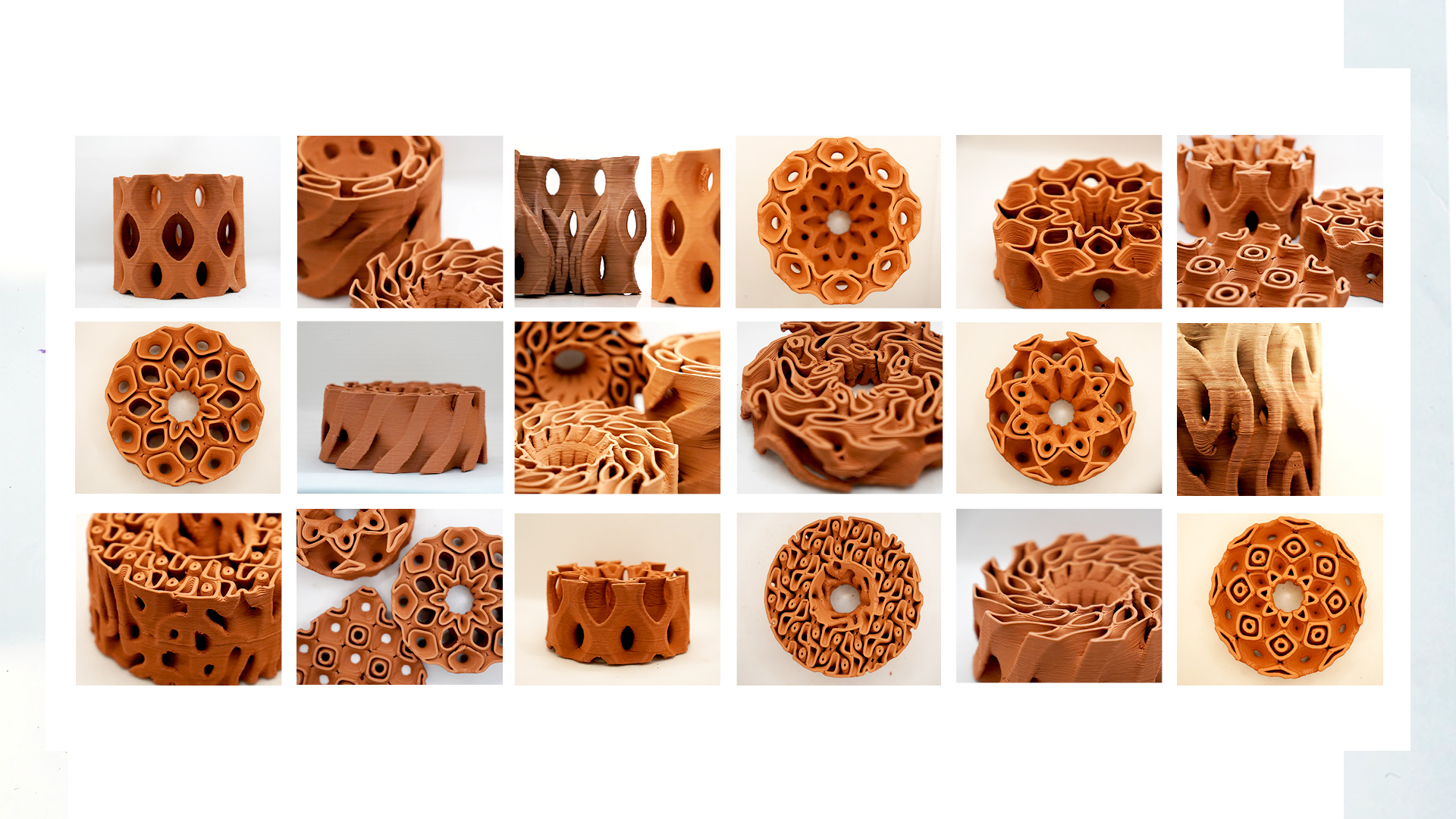
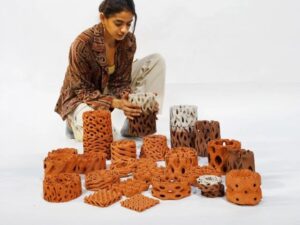
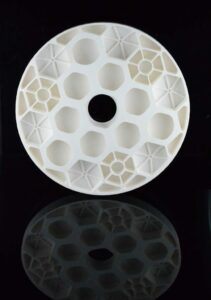
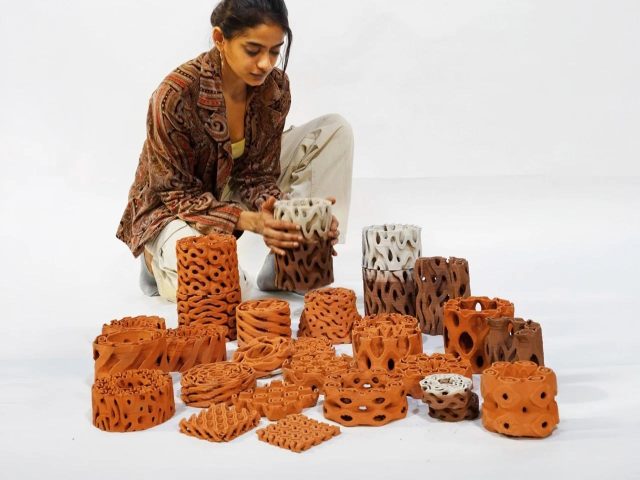
London-based designer and architect Rameshwari Jonnalagedda has introduced Minimal Matter, an innovative system of 3D printed terracotta modules that merges advanced ceramic additive manufacturing with the mathematics of minimal surfaces. Drawing inspiration from natural geometries found in soap films, leaf veins, and cellular membranes, the project investigates how structural efficiency and material porosity can intersect in contemporary architecture. By utilizing clay printing, the system creates modular components capable of acting as thermal barriers, ecological habitats, or structural elements depending on their final geometric configuration.
The project recently gained recognition in the Young Talents category at the Design Intelligence Award and has been featured at prominent exhibitions such as the London Design Festival and Dutch Design Week. Rather than treating building materials as static entities meant to resist environmental exposure, Minimal Matter is purposefully designed to age, host biodiversity, and adapt over time. The open-structured ceramic allows moss, insects, air, and light to integrate directly into the architecture.
Key Specifications and Technical Parameters
The technical approach behind Minimal Matter relies heavily on the capabilities of automated clay deposition to maintain geometric fidelity across various structural scales. While specific printer hardware manufacturers vary by installation, the fabrication workflow depends on precise extrusion parameters tailored for ceramic mediums.
- Primary Material: Porous terracotta clay engineered for moisture retention and biological colonization.
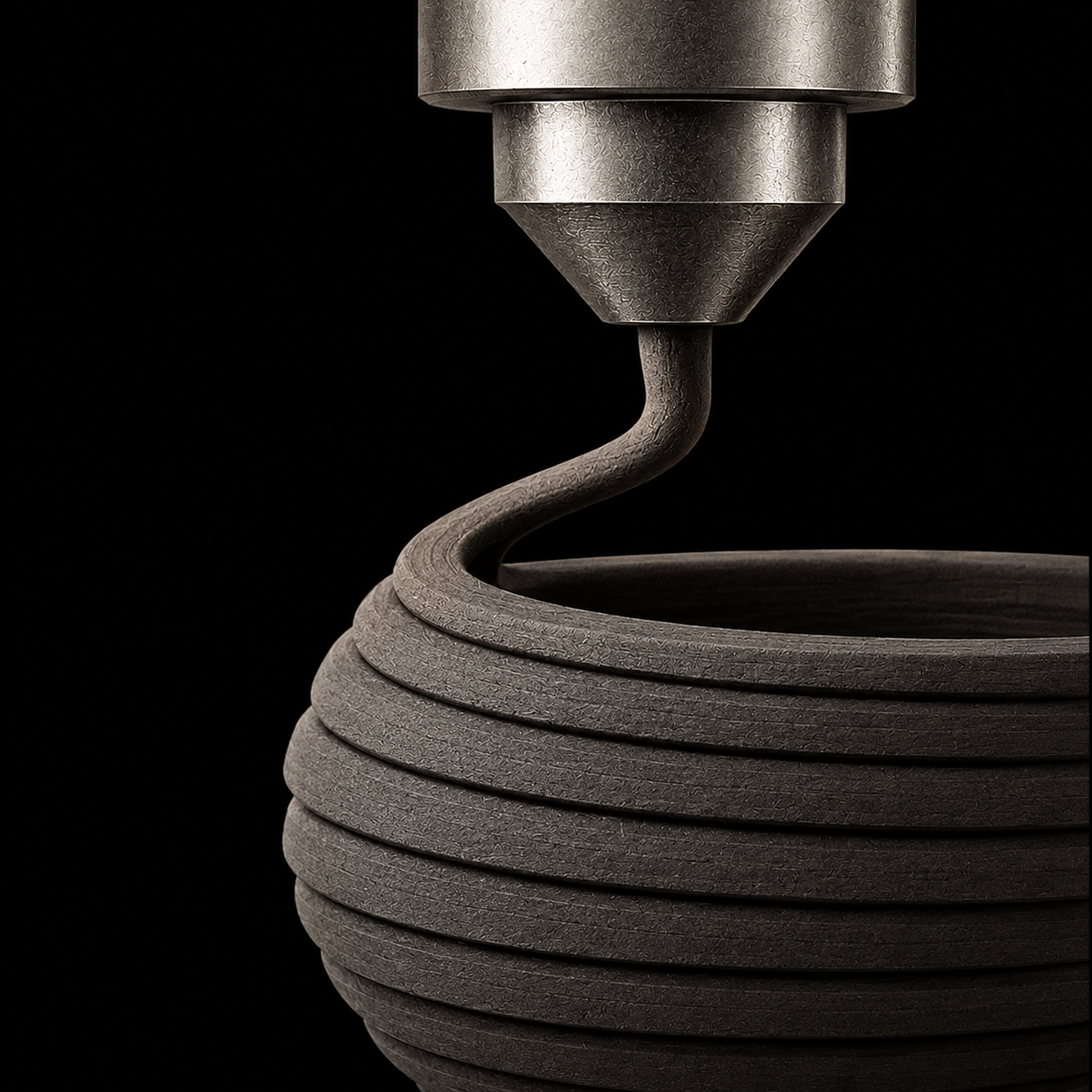
- Fabrication Method: Extrusion-based ceramic 3D printing, translating digital minimal surface algorithms into physical layers.
- Surface Finish: Unprocessed printed deposition lines that serve as visible topographic contour records of the manufacturing process.
- Modular Scalability: Consistent underlying geometry applied across scales, allowing individual units to function as standalone sculptures, stacked columns, or continuous wall cladding.
- Exhibition Contexts: Debuted during the London Design Festival and showcased at Dutch Design Week.

Material Behavior, Porosity, and Biological Integration
Conventional construction industries typically prioritize materials engineered to resist weathering and biological decay. In contrast, Jonnalagedda’s design philosophy treats biological colonization as a core component of long-term material performance. The porous nature of the 3D printed terracotta welcomes natural agents, turning the building envelope into a living surface. This approach aligns with broader investigations into material agency, where structural components participate actively in their surrounding ecosystems rather than isolating interiors from the outside world.
Additive manufacturing serves as the vital enabler for this level of morphological complexity. Traditional ceramic manufacturing techniques, such as casting or hand-forming, would struggle to produce the continuous, non-repeating internal curves required for minimal surface geometries without incurring prohibitive costs and tooling complexities. Furthermore, the visible layer lines left by the printer head are not concealed; instead, they function as an aesthetic and tactile record of the deposition process, celebrating the inherent logic of digital fabrication.
Biomimicry and Thermal Regulation
Jonnalagedda’s research extends into thermal management through her related work on passive cooling systems, such as the TerraMound project developed during her Master’s studies at the Bartlett School of Architecture, UCL. Inspired by the complex ventilation networks of termite mounds, these ceramic systems utilize branching internal channels to naturally circulate air and regulate internal temperatures without relying on energy-intensive mechanical air conditioning.
By pairing terracotta’s natural thermal mass—which absorbs and releases heat slowly—with intricate internal air channels driven by external wind conditions, these structures achieve effective passive cooling. The integration of ceramic 3D printing makes it economically and geometrically feasible to produce these complex, internal void networks that conventional masonry cannot replicate.

Practical Context for Ceramic Artists and Architects
The Minimal Matter project provides a compelling reference point for architects and ceramic artists exploring the intersection of ecology and digital manufacturing. By demonstrating that 3D printed clay can scale seamlessly from small decorative objects to large building skins, the work highlights the practical viability of material-efficient construction. As the architecture and design sectors face mounting pressure to reduce carbon footprints and energy consumption, projects that utilize geometry and material selection to manage thermal performance offer a viable path forward.
Ultimately, Jonnalagedda’s work challenges the conventional paradigm of imposing built structures onto a site. Instead, it suggests a future where architectural elements are designed to grow, adapt, and co-exist with their surrounding environments over extended lifecycles.
Original Source
Sources: