TUM Researchers 3D Print Clay Façade for Urban Wildlife
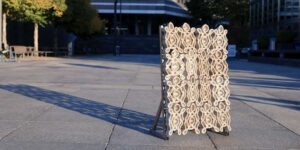
Researchers at the Technical University of Munich have developed a pioneering 3D printed clay wall façade that provides nesting shelters and heat relief for urban wildlife such as birds and hedgehogs.
Published: July 21, 2025 • Original report: 2025-07-18

Blending Digital Fabrication with Urban Ecology
Urban environments present numerous challenges for local wildlife, forcing animals to adapt to physiological and behavioral pressures like noise and habitat loss. Recognizing the need to actively accommodate urban creatures, a team of researchers from the Technical University of Munich (TUM) has engineered a groundbreaking 3D printed wall façade that functions as a natural nesting shelter. This innovative prototype merges sustainable digital fabrication techniques with ecological design, offering a tangible solution for animals struggling to find safe environments within concrete jungles.
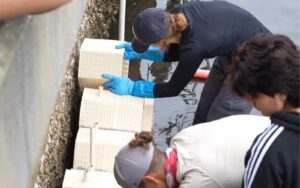
Led by Professor Wolfgang Weisser, Chair of Terrestrial Ecology, alongside Professor Kathrin Dörfler, Chair of Digital Fabrication, and doctoral researcher Iuliia Larikova, the project represents a collaborative effort to rethink building skins. Larikova specifically focuses on the additive manufacturing of climate-positive and biodiversity-improving façade elements. The completed prototype has already been installed at the Feierwerk Südpolstation recreation center in Munich, where it is currently undergoing evaluation before additional installations are rolled out, including a planned project on the historic Water Tower in Ingolstadt.
Key Highlights & Specifications
- Material Composition: Printed using a local clay material containing 40% recycled content.
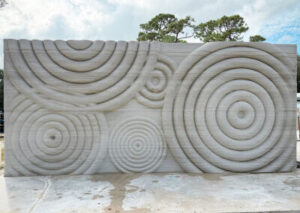
- Design Geometry: Features a tessellated geometric structure designed to create a self-shading effect.
- Wildlife Capacity: Capable of accommodating over 20 animals simultaneously, including birds and hedgehogs.
- Access Points: Incorporates small gaps for avian species like sparrows and black redstarts to access interior hollow spaces, plus dedicated entry points at the base for hedgehogs.
- Thermal Benefits: Provides respite from heat for animals through self-shading while also holding the potential to reduce indoor building temperatures for humans.
- Broader Initiative: Part of the wider ECOLOPES project aimed at fostering holistic urban ecosystems where nature and humans co-evolve.
Material Processing and Additive Workflow
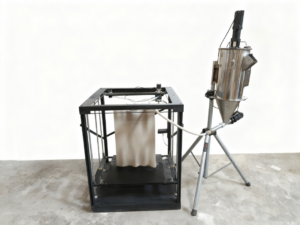
The creation of this biodiversity-boosting façade relies on advanced ceramic additive manufacturing workflows. Utilizing a specially formulated local clay compound—of which nearly half is sourced from recycled materials—the team leverages digital fabrication technologies to deposit the earthen medium into complex, geometry-driven forms. This additive approach allows for precise control over the panel’s porosity and internal cavities without the waste typical of traditional subtractive manufacturing.
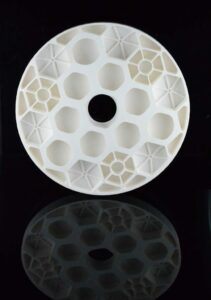
During the printing process, the robotic systems deposit the clay into a sophisticated tessellated pattern. This specific digital design not only structuralizes the wall cladding but also inherently forms the necessary internal chambers and exterior apertures. Small gaps are meticulously integrated into the upper and middle sections to let birds reach the interstitial space between the panel and the building wall, while wider ground-level openings welcome hedgehogs. Furthermore, the overall architecture of the 3D printed components is strategically arranged to block direct sunlight, resulting in a self-shading skin that regulates temperature through passive thermal mass and geometry alone.
Implications for Ceramic Artists, Architects, and Makers
For the ceramic additive manufacturing community, this TUM project illustrates a compelling shift from purely aesthetic or structural architectural ceramics toward functional, living architecture. Architects and makers are increasingly challenged to design buildings that actively repair or enhance local ecosystems rather than merely minimizing negative environmental impacts. By utilizing earthen materials like clay—which is naturally local, recyclable, and thermally responsive—designers can bridge the gap between digital fabrication and regenerative environmental practices.
This initiative also highlights the viability of incorporating recycled content into large-scale architectural clay prints, demonstrating that sustainable sourcing does not compromise structural or geometric complexity. As projects like ECOLOPES and institutions such as TUM continue to validate these bio-inclusive 3D printed façades in real-world settings like Munich’s recreation centers and historic towers, ceramic artists and architects gain a powerful blueprint for how digital clay printing can directly support urban biodiversity and climate resilience.
Source & Project Documentation
Primary Sources: