Abu Dhabi Partners with Archireef for 3D Printed Coral Restoration
Abu Dhabi has signed an agreement with Archireef to utilize 3D printed terracotta tiles for marine ecosystem restoration. The initiative targets the Ras Ghanadah protected area to rehabilitate coral habitats.
Published: October 18, 2025 • Original report: 2025-10-15
Abu Dhabi Adopts 3D Printing for Marine Conservation
The Environment Agency of Abu Dhabi has formalized a partnership with climate technology company Archireef to deploy 3D printed terracotta structures for coral reef restoration. The agreement was officially established during the 2025 World Conservation Congress in Abu Dhabi, uniting regional environmental management with additive manufacturing techniques to support local marine biodiversity.
The collaborative initiative focuses on the Ras Ghanadah protected area, the region’s largest coral reef spanning nearly 55 square kilometers with 7.1 square kilometers of active coral. By introducing specially engineered ceramic modules, the project aims to counteract habitat loss driven by rising sea temperatures and environmental degradation.
Key Facts & Specifications
- Partner Organizations: Environment Agency of Abu Dhabi and Archireef
- Project Location: Ras Ghanadah protected area, United Arab Emirates
- Material: Non-toxic terracotta clay
- Design Features: Biomimicry geometry with integrated legs to prevent sinking into the seabed
- Performance Metric: Approximately 95 percent coral survival rate in previous deployments

Terracotta Geometry and Environmental Application
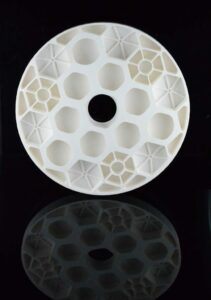
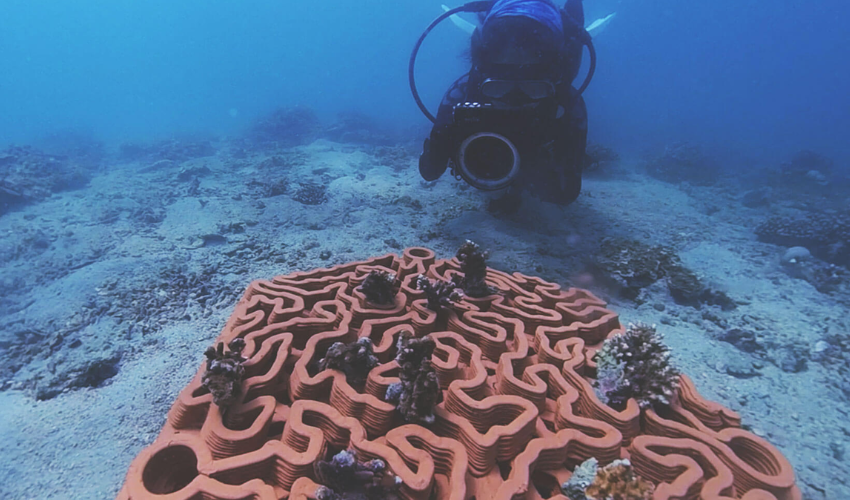
Archireef produces the restoration units using additive manufacturing to replicate natural coral structures. The non-toxic terracotta composition provides a stable substrate for new coral fragments to attach and grow. Additionally, the physical geometry includes specific base supports designed to prevent the tiles from settling into the sandy seabed, ensuring long-term structural stability in coastal environments.