TU Graz 3D Prints Porous Ceramic Cubes for Electricity-Free Cooling
Researchers at Graz University of Technology are using 3D printed ceramic cubes to provide passive, evaporative cooling for buildings without consuming electricity.
Published: August 7, 2026 • Original report: 2026-08-04
Passive Building Cooling Through Additive Manufacturing
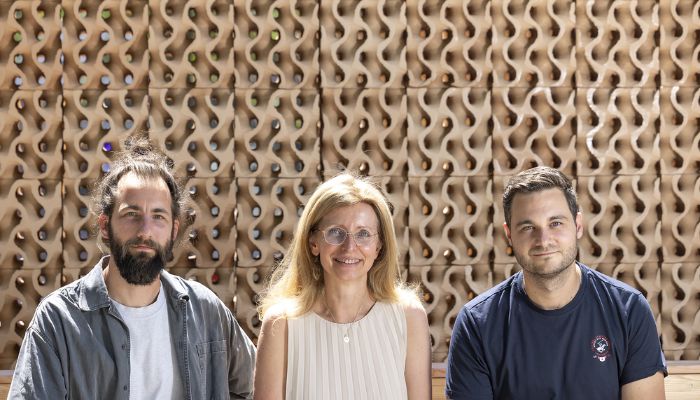
Researchers at the Institute of Architecture and Media at Graz University of Technology (TU Graz) have developed 3D-printed porous ceramic cubes designed to cool interior spaces without the need for electricity. Led by team members including Milena Stavric, Kristijan Ristoski, and Julian Jauk, the project leverages evaporative cooling principles by utilizing complex, highly absorbent clay structures that draw and distribute water via capillary action.
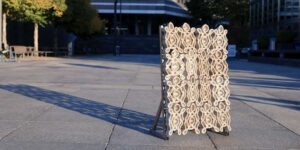
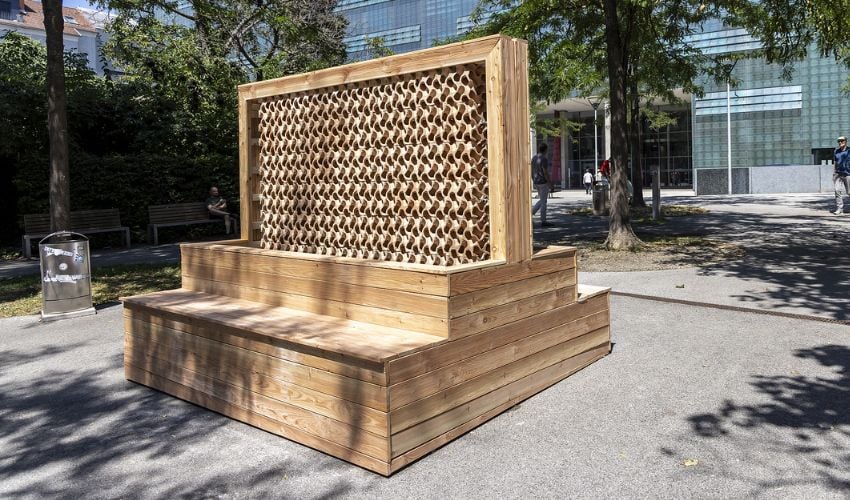
The project is part of ongoing evaluations into sustainable, low-tech climate control methods for urban environments facing rising summer temperatures. To test the practical application, the research team constructed a free-standing, two-by-two-metre demonstration wall at TU Graz’s Campus Neue Technik in Stremayrgasse, alongside a public display at the city’s Museum of Perception.
Key Facts and Specifications
- Institution: Graz University of Technology (TU Graz), Institute of Architecture and Media
- Cube Dimensions: Approximately 23 centimeters per side
- Material Composition: Ceramic clay mixture, fired at low temperature
- Experimental Variants: Fungal cultures (mycelium) and sawdust added to the clay mixture to burn away during firing, creating enhanced micro- and macro-pore networks; alternative tests utilize dredged sediment from Lake Neusiedl
- Performance: Measured temperature drop of nearly 7°C in the immediate vicinity of a water-filled cube tested in a hot attic
- Funding & Partners: Funded by Austria Wirtschaftsservice GmbH (aws); collaboration with TU Graz’s Institute of Building Physics, Services and Construction
Material Innovation and Evaporative Mechanics
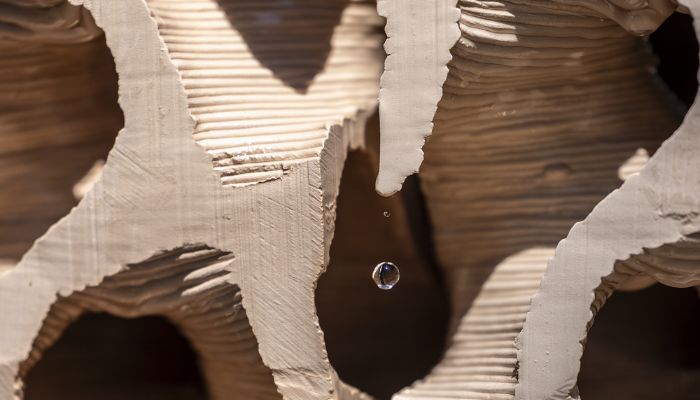
The functionality of the cooling units relies on the combination of digital design and ceramic material science. Additive manufacturing enables the production of geometries that maximize the surface area available for water evaporation. As water spreads evenly through the interconnected pores of the low-temperature fired clay, the liquid evaporates and draws thermal energy away from the surrounding air. The inclusion of organic additives like mycelium and sawdust during the preparation phase helps tailor the internal porosity of the clay, further optimizing capillary water transport.