Testing Limits: Printing the Iconic 3DBenchy with the LUTUM Clay Printer
Vormvrij explores the nuances of ceramic additive manufacturing by pushing the LUTUM clay printer to reproduce the industry-standard 3DBenchy benchmark model. This experiment highlights the critical adjustments required for successful clay extrusion and structural stability.
Published: April 3, 2020 • Original report: 2020-03-31
Pushing the Boundaries of Ceramic Benchmark Printing
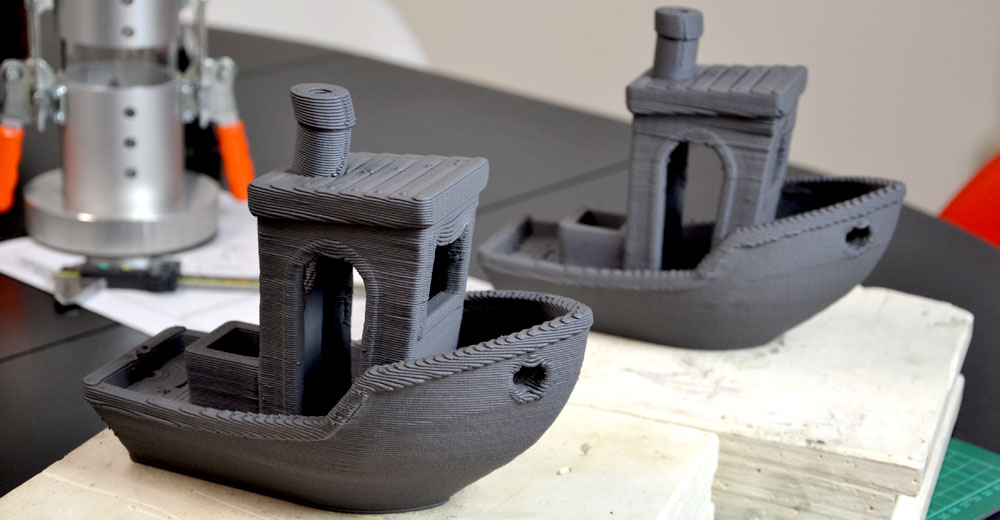
For years, the 3DBenchy has served as the universal litmus test for FDM 3D printing, challenging machines to handle overhangs, bridging, and delicate geometries. Recently, the team at Vormvrij took this challenge into the realm of ceramic additive manufacturing using their signature LUTUM clay printer. While printing plastic is common, translating this complex, small-scale geometry into clay reveals the unique physics of wet paste, where structural integrity and material weight become the primary adversaries.
Achieving a successful ceramic Benchy required more than simply importing an STL file. The project highlights the necessity of fine-tuning slicing parameters—specifically for the delicate cabin structure and the vertical stability of the chimney. By iterating on layer heights, extrusion multipliers, and support structures, the Vormvrij team successfully navigated the limitations of clay to demonstrate that even the most difficult plastic benchmarks can be adapted for ceramic production with the right technical approach.
Key Highlights & Specifications
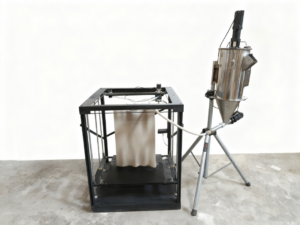
- Printer Used: LUTUM Pro+ clay printer.
- Slicing Software: PrusaSlicer 2.2.0.
- Scaling: Original model scaled to 300% for optimal print results.
- Bridging Adjustments: Standard bridging multipliers (1.0) proved too high for clay; 0.65 multiplier used for 1:3 ratio, and 0.5 multiplier for 1.25:3 ratio.
- Extrusion Control: Flow rate was reduced by 50% to compensate for high-pressure requirements when using a 3mm nozzle.
- Structural Modifications: Added a small support beam under the roof to prevent chimney distortion and connecting strands to stabilize window and door frames.
How the Technology Works
The workflow for printing with the LUTUM system differs significantly from traditional filament extrusion. The process begins with selecting a nozzle diameter and establishing a specific layer-to-nozzle ratio. In this study, the team tested both 1:3 and 1.25:3 ratios. Unlike plastic, which cures almost instantly upon cooling, clay remains in a malleable, wet state throughout the build, making every pass of the print head a potential hazard for existing geometry.
Using PrusaSlicer, the operator must meticulously manage the print path to avoid excess infill that could overwhelm the delicate cabin walls. Because the material is heavy, the “bridging” parameters require extreme care. If the extrusion multiplier is too high, the clay sags; if too low, the connection is lost. The final workflow involved a mix of hardware control—lowering speed directly on the printer control box if the system stalled—and software configuration, including pre-set bundles that regulate flow and speed to ensure consistent material deposition.
Why It Matters for Ceramic & Clay 3D Printing
This experiment is a vital lesson for ceramic artists and architects interested in the limitations of clay 3D printing. The 3DBenchy is a harsh critic; its vertical shells and cantilevered cabin sections mimic real-world architectural challenges where weight distribution is key. By experimenting with these geometries, makers learn how to introduce hidden supports—like the small beams and connecting strands used here—to overcome the material’s natural tendency to slump during the drying process.
For those looking to replicate these results, the availability of configuration bundles for the LUTUM printer demonstrates the growing maturity of open-source software workflows in the ceramics industry. By understanding how to manipulate flow and speed settings for challenging shapes, makers can move beyond simple vases and cylinders, opening the door to complex, artistic, and functional ceramic forms that were previously thought impossible to print.
Project Video
Source & Project Documentation
Primary Sources:
Related Links & Files: