Unveiling BRUTUM: Vormvrij’s First 50-Hour Large-Scale Clay Print
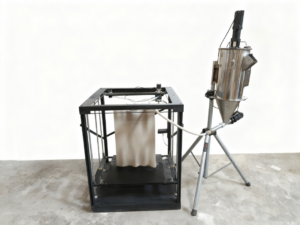
Vormvrij introduces the BRUTUM concept printer, showcasing its capacity for massive ceramic additive manufacturing through a 50-hour heat-exchanger project. This large-format machine marks a significant step forward in industrial clay printing capabilities.
Published: March 23, 2020 • Original report: 2020-03-20
A New Frontier in Large-Scale Ceramic Fabrication
The landscape of ceramic additive manufacturing is shifting as Vormvrij reveals the first successful long-duration print from its BRUTUM concept machine. Designed to tackle the limitations of traditional clay printers, this large-scale system aims to provide the structural stability and volume required for ambitious architectural and industrial applications.
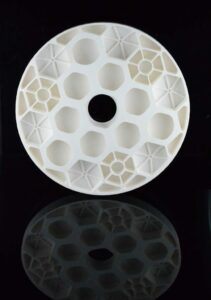
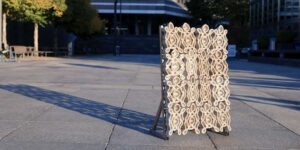
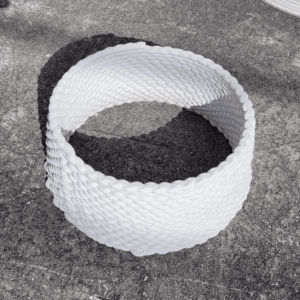
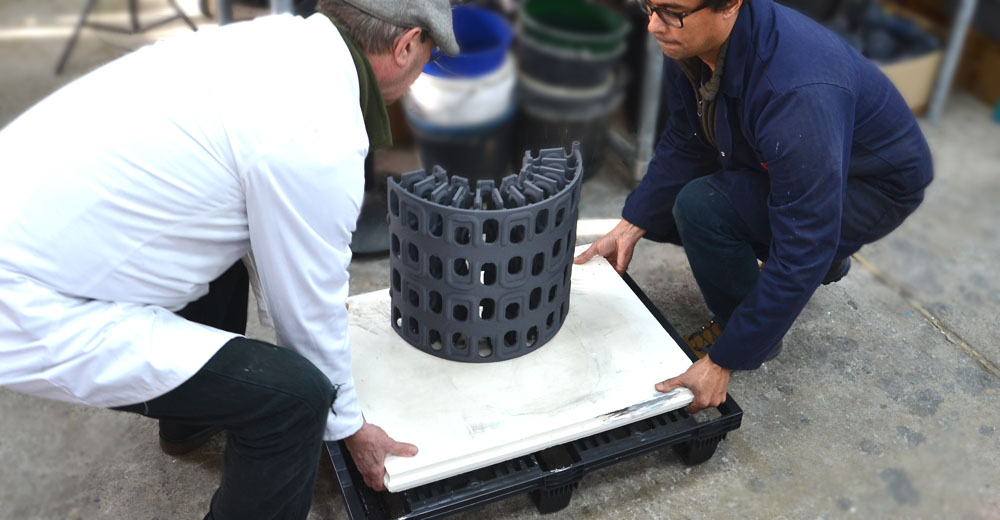
To demonstrate the machine’s prowess, the Vormvrij team completed a demanding 50-hour print run featuring a complex ceramic heat-exchanger design. This milestone highlights not only the machine’s endurance but also its ability to maintain high levels of detail across a multi-day manufacturing process.
Key Highlights & Specifications
- Project Duration: 48 hours of total active print time.
- Total Material Consumption: 25 kilograms of clay material.
- Extrusion Detail: Utilizes a 3mm nozzle diameter for consistent material flow.
- Layer Precision: Configured to a 1mm layer height to balance structural integrity and print resolution.
- Application Scope: Specifically developed for high-volume, large-format ceramic concept pieces.
The Mechanics of Large-Format Extrusion
The BRUTUM system represents a significant evolution in how clay is managed during long-duration additive manufacturing. By utilizing a high-flow extrusion mechanism, the printer can manage large quantities of ceramic paste without sacrificing the adhesion between layers. The 25kg capacity utilized for this specific heat-exchanger project demonstrates the system’s ability to handle the weight and drying nuances inherent to large-scale clay parts.
The workflow for the BRUTUM involves a refined calibration of paste consistency and extrusion rate, which is critical when printing over several days. Maintaining a 1mm layer height with a 3mm nozzle suggests a focus on creating thick-walled, robust structures capable of supporting their own weight during the green state, which is vital for complex geometries that would otherwise collapse under conventional parameters.
Impact on the Ceramic and Architectural Industry
For ceramic artists, industrial designers, and architects, the debut of the BRUTUM is a promising development. One of the primary bottlenecks in ceramic 3D printing has historically been the build volume—most desktop units are unable to produce functional, large-scale items like heat exchangers or structural building components. The BRUTUM addresses this by providing a reliable platform for functional prototypes.
By enabling the production of intricate, large-scale geometries, this technology opens doors for architects looking to integrate 3D-printed ceramic elements into sustainable building projects. Furthermore, the capability to print complex internal architectures—such as those seen in a heat exchanger—suggests that Vormvrij is moving toward applications that prioritize thermodynamic performance and structural efficiency, rather than just aesthetic value.
Project Video
Source & Project Documentation
Primary Sources: