ETH Zurich Unveils Impact Printing for Sustainable Earth Structures
Researchers at ETH Zurich have developed impact printing, a robotic additive manufacturing technique that shoots clay and excavated earth at high velocities to build sustainable walls without cement.
Published: September 14, 2024 • Original report: 2024-09-11

Revolutionizing Sustainable Construction Through High-Velocity Earth Printing
Researchers at ETH Zurich have introduced a groundbreaking robotic additive manufacturing technique known as “impact printing,” designed to fundamentally reshape the construction sector. By utilizing cheap, plentiful, and environmentally sustainable circular materials such as clay, silt, and excavated earth, this innovative approach completely eliminates the need for carbon-intensive cement. Traditional building techniques relying on raw earth are frequently bottlenecked by slow, labor-intensive, and expensive workflows, but the ETH Zurich team has engineered an automated solution that drastically accelerates production.
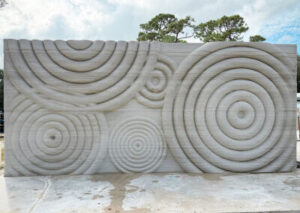
Unlike conventional additive manufacturing methods that build objects through slow layer-by-layer deposition, impact printing relies on construction robots shooting material from above. The components bond firmly upon impact with minimal additives, bypassing the lengthy pauses usually required for material solidification in traditional concrete 3D printing. This development represents a major milestone for earthen architecture and automated clay fabrication, offering a scalable pathway toward zero-cement infrastructure.
Key Highlights and Technical Specifications
- Process Name: Impact Printing
- Developer: ETH Zurich
- Material Velocity: Up to 10 meters per second
- Material Composition: Excavated materials, silt, and clay with minimal mineral admixtures, largely sourced from Eberhard Unternehmungen
- Maximum Structure Height Achieved: Up to 3 meters
- Deployment Platforms: High-payload gantry systems at the Robotic Fabrication Laboratory and the HEAP platform (an autonomous, legged excavator developed by ETH Zurich’s Robotic Systems Lab)
- Accolades: Winner of the prestigious 3D Pioneers Challenge in 2023
The Mechanics of High-Velocity Earthen Extrusion
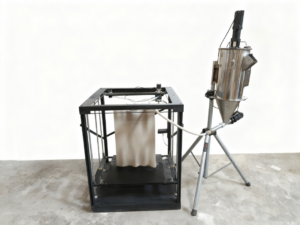
The operational workflow of impact printing diverges sharply from standard extrusion-based ceramic and concrete 3D printing. Instead of gently laying down continuous beads of material, a custom-engineered printing tool developed at ETH Zurich propels the earth-based mixture at speeds reaching up to 10 meters per second. This high-velocity impact ensures immediate and robust mechanical bonding between layers, eliminating the necessity for intermediate drying periods or stabilizing chemical additives.
Designed for versatility, the custom print head integrates seamlessly into various high-payload robotic platforms. This adaptability allows the technology to operate efficiently both in controlled off-site manufacturing environments and directly on active, unstructured construction sites. By mounting the tool onto mobile systems like the legged HEAP excavator, the technology can traverse variable terrain to construct large-scale architectural elements and functional infrastructure.
Why Impact Printing Matters for Earthen Architecture and Makers
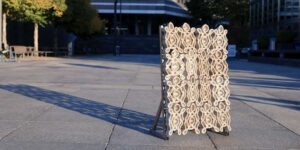
For ceramic artists, sustainable architects, and digital fabrication specialists, impact printing unlocks exciting new possibilities for freeform structural design without the environmental drawbacks of traditional binders. The low-CO2 earth mixture—formulated by the Chair of Sustainable Construction at ETH Zurich—leverages locally sourced secondary materials, radically shrinking the carbon footprint of building envelopes and landscape structures like acoustic barriers.
Furthermore, the ability to deploy the technology autonomously via mobile excavators bridges the gap between digital design and real-world civil engineering. As an ETH spin-off moves to commercialize this award-winning technology, impact printing stands ready to transition from academic research into a mainstream commercial tool for circular, earth-based construction.
Source & Project Documentation
Primary Sources: