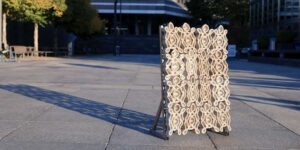
WASP and Giulio Giorgi 3D Print Sensory Garden for RHS Chelsea Show
Discover how WASP and designer Giulio Giorgi utilized a 3D printing farm to create over 600 ceramic planters for a therapeutic sensory garden at the RHS Chelsea Flower Show.
Published: May 25, 2024 • Original report: 2024-05-22

Cultivating Healing Through Earthen Innovation
The annual RHS Chelsea Flower Show in the United Kingdom has unveiled a captivating addition to its renowned horticultural displays: a 3D printed sensory ceramic garden. Designed by Italian landscape architect Giulio Giorgi, the exhibition space serves as a tranquil sanctuary crafted specifically for children undergoing cancer treatments. By engaging sight, sound, smell, touch, and taste, the garden provides young patients with a grounding connection to nature during difficult hospital stays.
To bring this visionary space to life, Giorgi collaborated with WASP, an Italian pioneer in large-scale architectural and ceramic additive manufacturing. Realized in partnership with World Child Cancer UK with funding from Project Giving Back, the installation highlights how advanced digital fabrication can intersect with compassionate design. The garden centers on more than 600 uniquely manufactured ceramic modules that form an immersive, replicable haven intended for future implementation across clinical environments globally.
Key Highlights & Specifications
- Total Production Output: Over 600 bespoke ceramic planters and units.
- Production Timeline: Manufactured in under two months using continuous operations.
- Hardware Utilized: WASP Clay 3D Printing Farm comprising a fleet of WASP 40100 3D printers.
- Printer Capabilities: Capable of extruding fluid-dense ceramic materials up to one meter in height.
- Design Collaborators: Giulio Giorgi and Giuseppe Fallacara, a professor at the Polytechnic University of Bari.
- Key Inspiration: Traditional keyhole gardens originating in sub-Saharan Africa.
- Irrigation Method: Integrated clay pitchers known as ‘ollas’ for passive, electricity-free water delivery.
Materials, Mechanics, and Digital Workflow
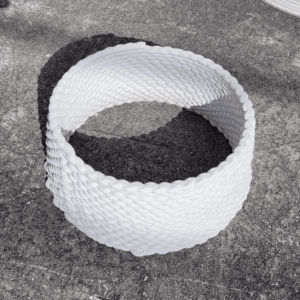
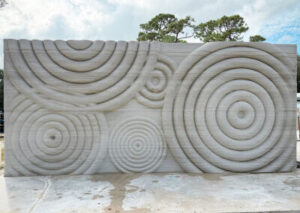
The creation of the garden’s expansive component library relied heavily on WASP’s robust production infrastructure. Utilizing their specialized Clay 3D Printing Farm, the team deployed multiple WASP 40100 machines capable of running 24/7 to meet the strict project deadline. These systems are specifically engineered to handle fluid-dense ceramic substances, accurately depositing layer upon layer to build structural elements reaching heights of up to one meter. This digital manufacturing workflow enabled the rapid iteration and mass-customization of complex geometries that would be immensely difficult to achieve through traditional slip-casting or hand-throwing.
From a conceptual standpoint, the modular units draw direct inspiration from keyhole gardens traditionally utilized in arid sub-Saharan regions to maximize agricultural yield in poor soils. In Giorgi’s design, these raised, accessible structures envelope the children in greenery while incorporating sustainable watering mechanics. Instead of relying on complex mechanical irrigation, the setup employs ancient porous clay vessels called ollas, which naturally and gradually seep moisture directly into the root systems without requiring electricity or high water pressure.
Industry Impact for Ceramic Artists, Makers, and Architects
For the specialized fields of ceramic additive manufacturing and earthen architecture, this project demonstrates the powerful scalability of automated clay extrusion. By leveraging printer farms rather than single-machine setups, designers can tackle large public installations with hundreds of structural components in remarkably short timeframes. This capability bridges the gap between digital design theory and real-world civic impact, proving that robotic clay printing is fully equipped to handle rapid turnaround projects.
Furthermore, the Chelsea Flower Show installation illustrates the profound adaptability of modular earthen architecture. Because the components are systematically designed for easy stacking and local replication, architects and non-governmental organizations can easily adapt the blueprints for diverse climates and hospital sites worldwide. For contemporary makers and ceramic artists, the collaboration underscores a shifting paradigm: 3D clay printing is no longer just a tool for artistic experimentation, but a viable, scalable medium for healing communities and solving real-world design challenges.
Source & Project Documentation
Primary Sources: